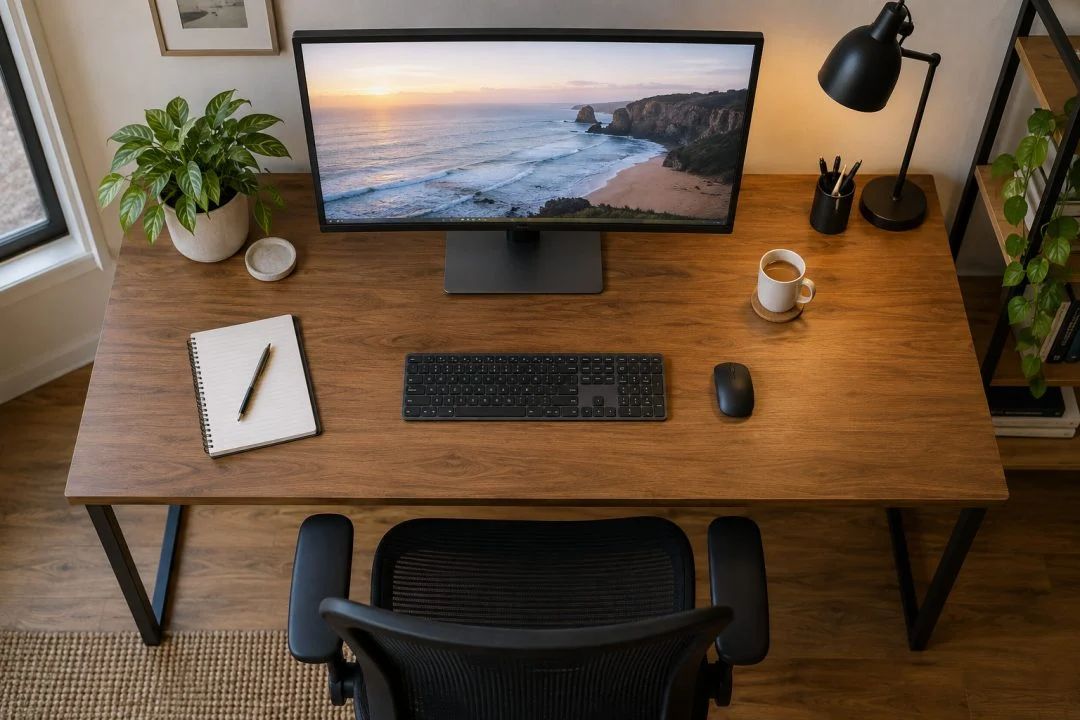
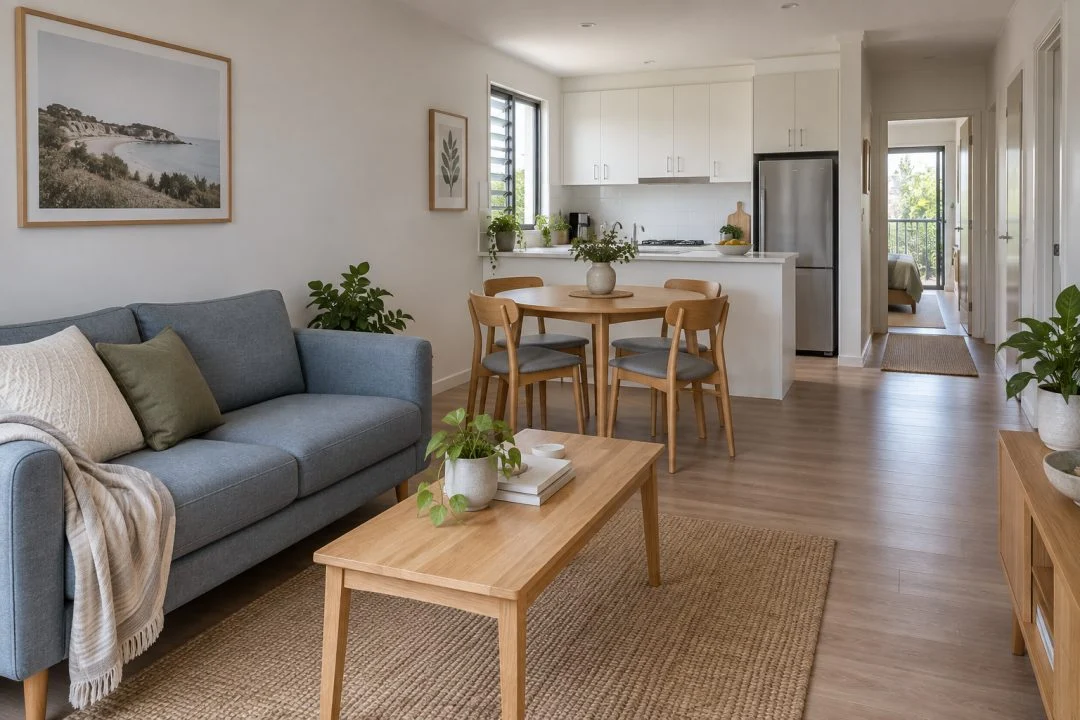
A Study Nook in the Living Room That Packs Away Neatly
Add a useful study nook to a living room with measured desk space, storage and a simple pack-away routine. Keep the main room usable.
A study nook in the living room works best when it has a clear working arrangement and a simple closing routine. The desk does not need to disappear, but the work should have somewhere to go.
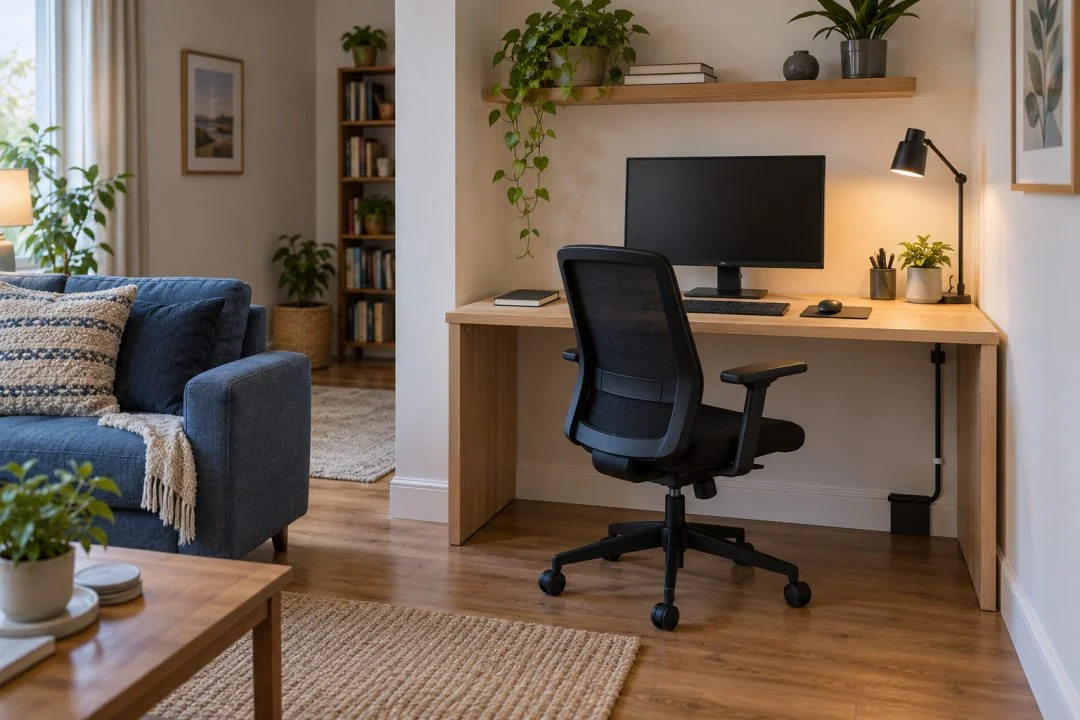
Choose the position for the work
Start with the equipment, chair and usable desk space. A shallow console may look unobtrusive but may not suit regular computer work. Use the desk-size guide to check the actual task.
Look at daylight, outlets, the route through the room and how other people use the seating area. A desk beside a door may be convenient for cables but inconvenient every time someone passes.
Give it a visual connection
Repeat one finish or colour from the living furniture. A timber tone, dark frame or upholstered chair colour can make the work area feel related without buying a matching range.
Keep the desk’s shape simple if it is visible from the main seating area. A modest closed drawer can be useful for small work items that would otherwise stay on top.
Plan the closed-down version
Decide where the laptop, paperwork and accessories go after use. Keep equipment stored according to its instructions, including ventilation and cooling requirements. A decorative cupboard is not automatically a suitable place to run a computer.
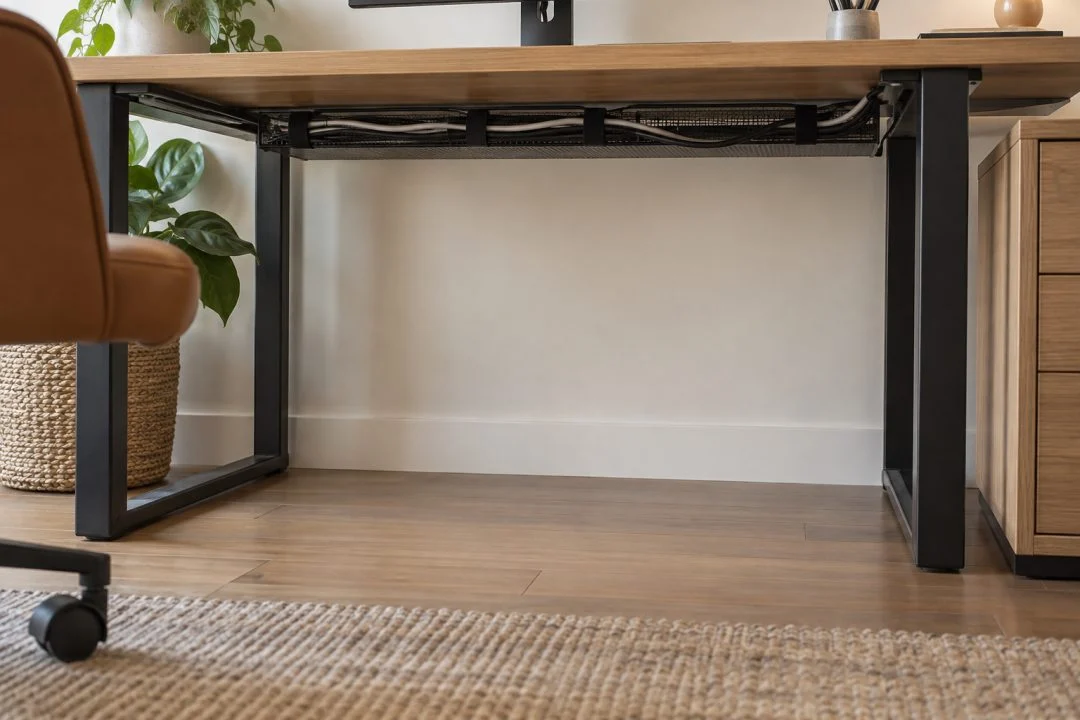
Keep confidential documents appropriately secured, especially in a shared room. Route cables so the work area does not create a trip hazard for people using the living room.
A five-minute reset
Save and close work · put current papers in their assigned place · return small accessories · tidy the cable ends · leave the chair and route clear.
Keep expectations realistic
A nook shares the room’s noise and activity. Furniture styling does not provide sound isolation. If the work needs regular private calls or uninterrupted concentration, consider how those needs will be managed.
Assess the working position with the workstation guidance. For storage, separate active items from archives so the nook is not asked to hold an entire office.
The successful version feels like a useful part of the living room after work, and a practical place to work when it is needed. Both states deserve a place on the plan.