Home Office Storage: Paperwork, Equipment and Everyday Access
Plan home-office storage around active work, archived paperwork and equipment. Compare internal capacity and access before adding cabinets.
Separate home-office storage into three groups: things you use now, things you consult occasionally and things you retain but rarely touch. Give the best positions to the first group.
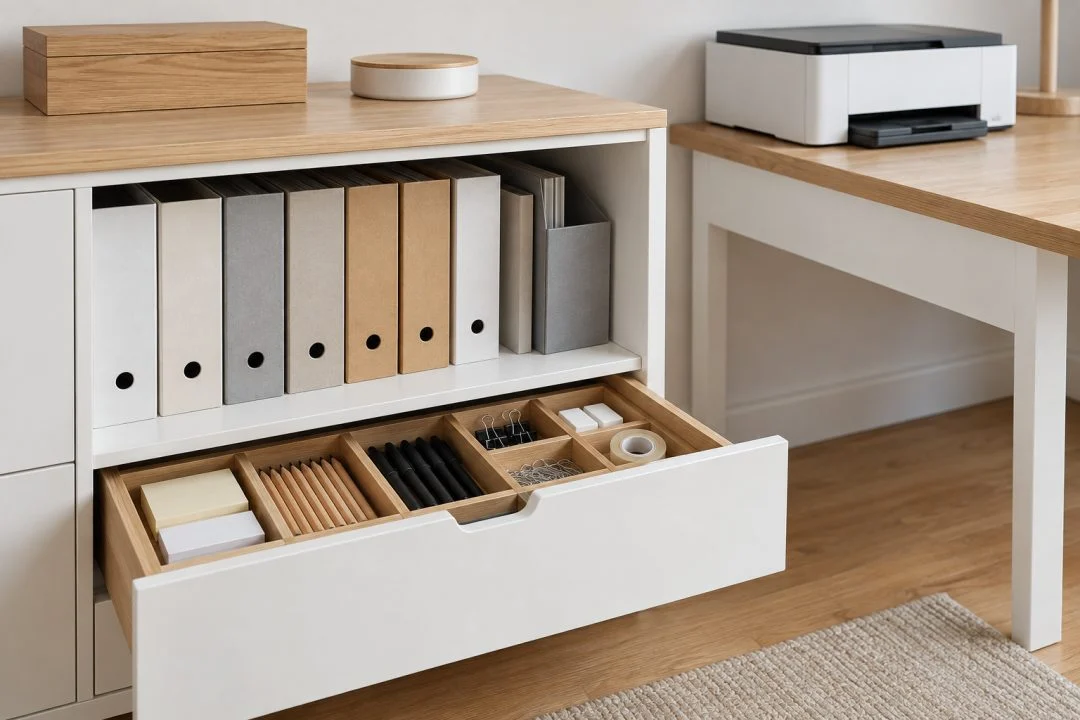
Active: keep it easy to reach
Current paperwork, frequently used stationery and everyday equipment should have a known place. A small drawer or shelf may be more useful than a large cabinet across the room.
Keep the working surface and leg space available for the task. The space under a desk is not automatically spare storage. A box there can interfere with the chair or the position you need.
Reference: make it easy to identify
Group manuals, folders and occasional supplies in a way you can understand quickly. Measure the folders you actually use, including their height and depth. Check the cabinet’s internal shelf space and load limits.
For filing drawers, confirm the supported file format and what fittings are included. A drawer described as storage does not necessarily accept hanging files.
Archive: decide what belongs here
Keep rarely used items out of the prime positions, but accessible when required. Follow the retention and security requirements relevant to your records; this furniture guide does not set legal document-retention periods.
A lockable cabinet offers a stated locking feature, not automatically certified security or fire protection. Look for evidence if a particular level of protection is required.
| Item | Before choosing the cabinet |
|---|---|
| Folders and files | Measure the actual format and check internal fittings. |
| Printer or equipment | Check support, access and manufacturer ventilation requirements. |
| Heavy supplies | Check shelf or drawer loads and safe handling. |
| Confidential records | Establish the appropriate security requirements independently. |
Check the cabinet in the room
Open its doors and drawers in your plan. Follow anchoring instructions and use furniture only for its intended purpose. The anchoring checklist covers the installation questions.
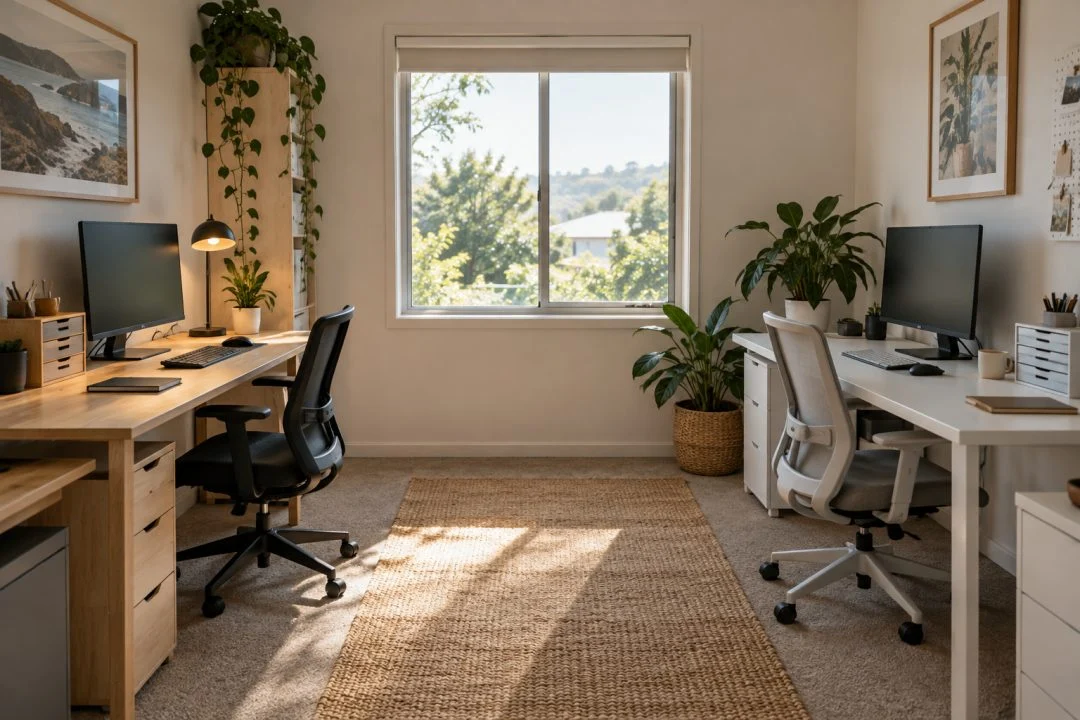
For a shared room, give each person a defined storage area. If the office is compact, settle the work position first and use the remaining space selectively.
A simple end-of-day test is enough: can you put the current work away in a minute or two without losing track of it? If not, change the arrangement before adding another cabinet.