How to Prepare Furniture for a Move Without Avoidable Damage
Prepare furniture for a move using product instructions, organised hardware and finish-safe protection. Know which jobs need experienced help.
Prepare furniture for a move by checking how it was designed to be handled. Some pieces can be disassembled according to their instructions; others should not be taken apart casually.
Make an inventory before packing
For each large piece, record the model, dimensions, manual location and any special handling instructions. Photograph its condition and assembly details that will help identify the parts later.
Plan appropriate help and equipment for the weight and route. Do not assume a cabinet can be carried safely by its top, handles or decorative parts. Follow the manufacturer’s directions and use a suitable moving service where needed.
Disassemble only where intended
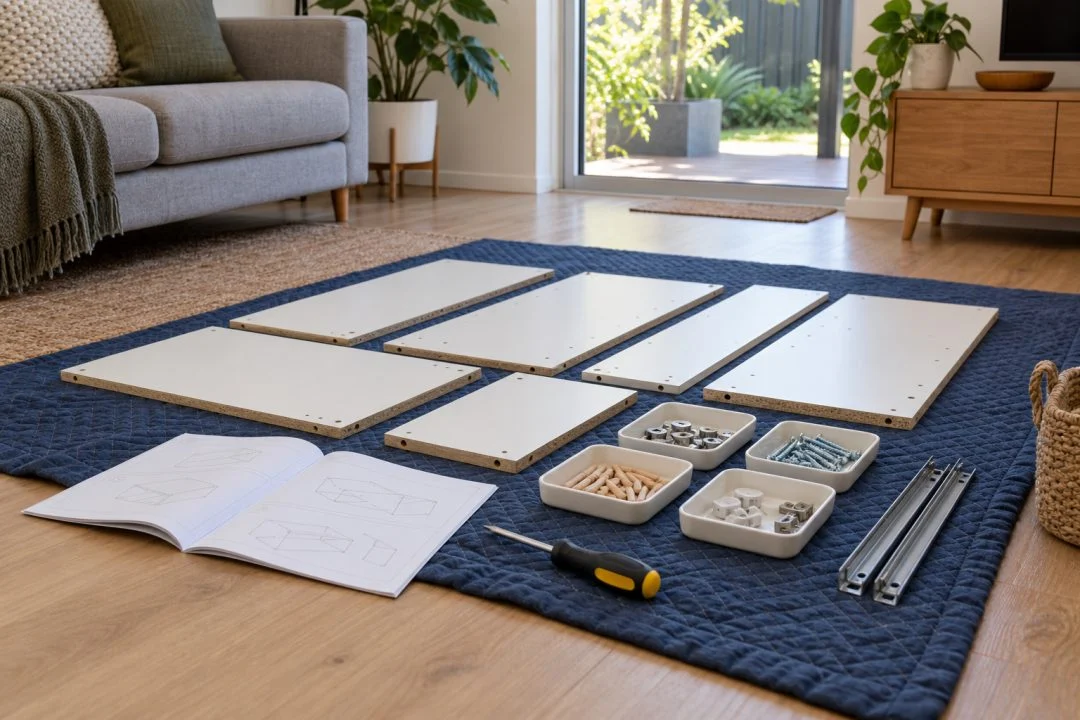
Read the manual before removing anything. If disassembly is permitted, label the parts and keep hardware grouped with the relevant piece. Avoid mixing visually similar screws from different items.
Do not remove structural components or dismantle a mechanism simply because the furniture is awkward to move. Ask the manufacturer or an appropriate professional where the method is unclear.
Protect the actual finish
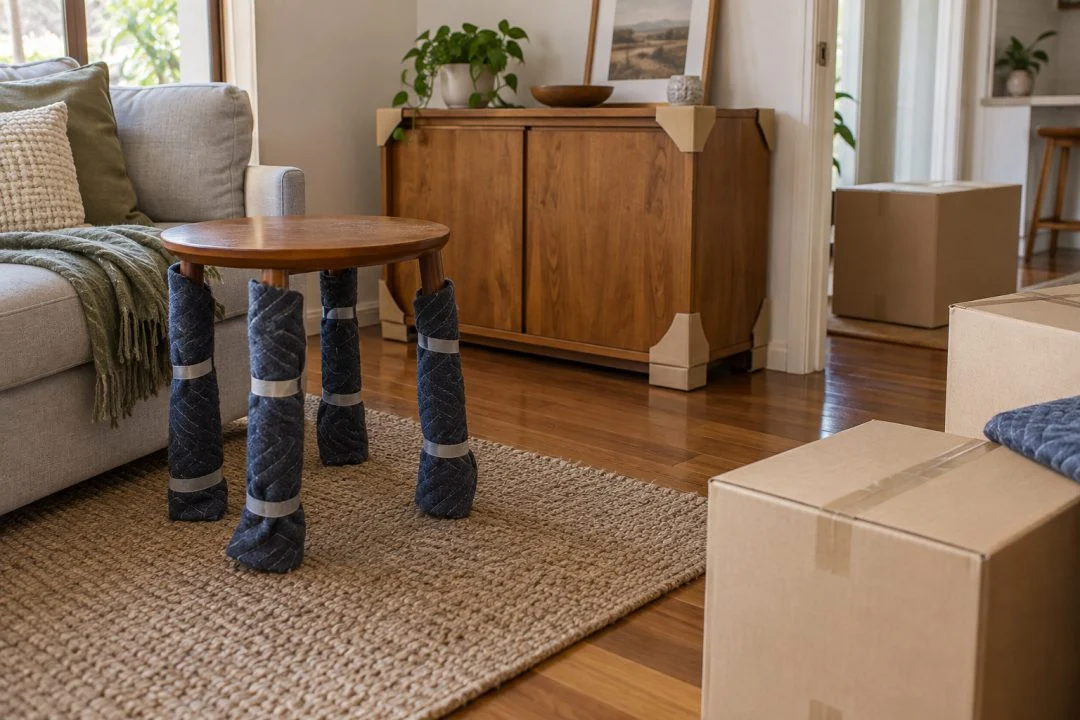
Choose packaging and protection compatible with the surface. Avoid placing adhesive directly on furniture finishes unless the product guidance allows it. Protect edges and loose components without trapping moisture or applying pressure to fragile parts.
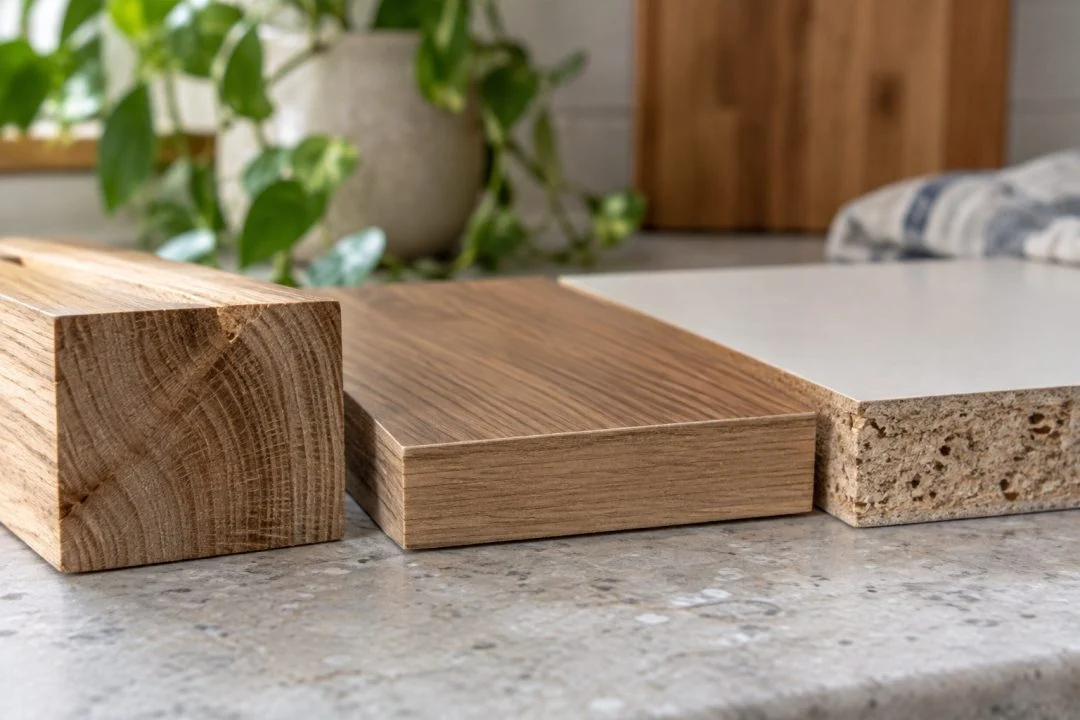
Timber, veneer and decorative surfaces can need different handling. The material terminology guide helps identify what the listing actually describes.
Plan the new installation too
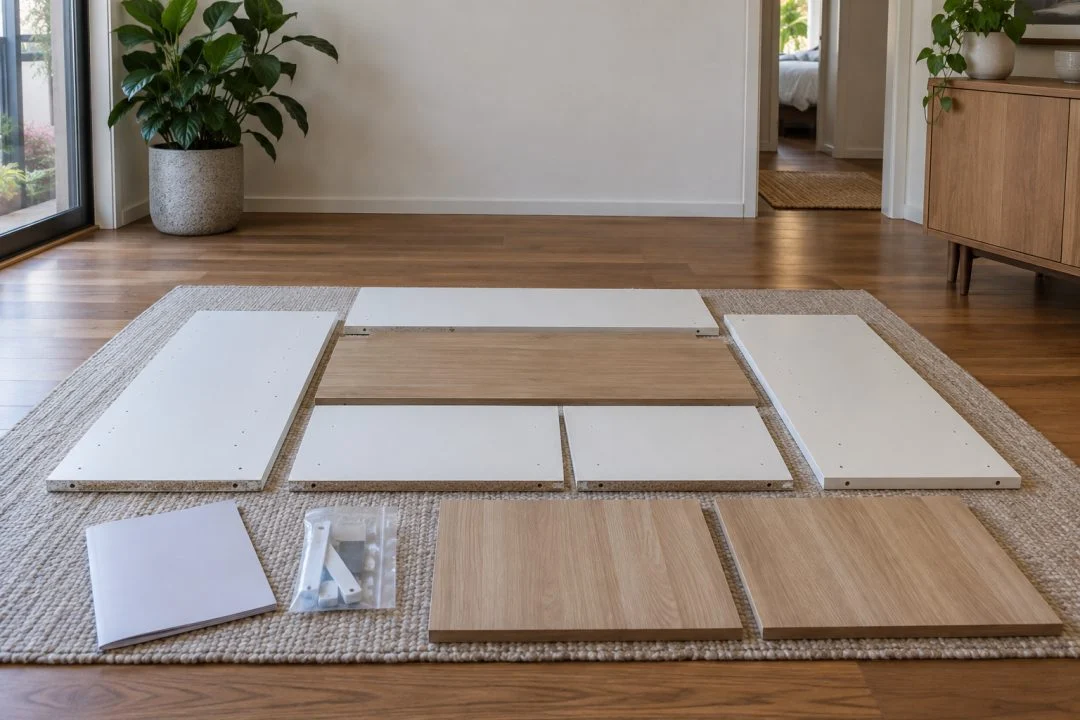
Check the route and final room before moving day. At the destination, inspect the furniture and reassemble it using the correct instructions. The assembly checklist is useful for organising that stage.
Re-establish required anchoring before use, with fixings appropriate for the new location. Do not assume old wall fixings can simply be reused. See the anchoring checklist for the questions to resolve.
Keep together
Manual · model reference · labelled hardware · before-move photographs · notes about permitted disassembly · installation requirements at the new home.
If a component is damaged or missing, resolve it before using the furniture. A careful move includes the return to a complete, correctly installed setup, not just getting the cartons through the door.