Mid-Century-Inspired Rooms Without Designer Price Tags
Use mid-century-inspired shapes, timber-looking finishes and restrained colour in an affordable room. Keep the approach practical and avoid buying a complete period set.
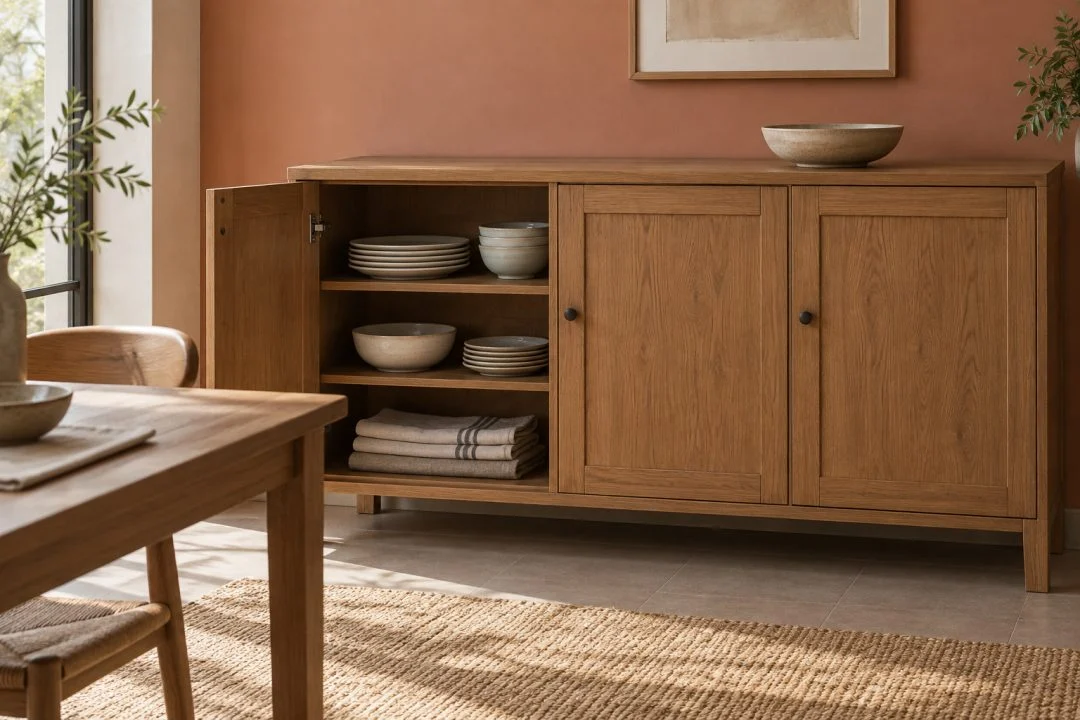
The outline is often what catches your eye: a low sideboard, a sofa lifted on slender legs, a chair with a gently angled back. You can use those cues in a mid-century-inspired room without buying collectible furniture or replacing everything at once.
Choose the shape you like, then bring the decision back to size, comfort, construction and price. A style description is not evidence of a piece’s age, designer or origin.
Give one silhouette the lead
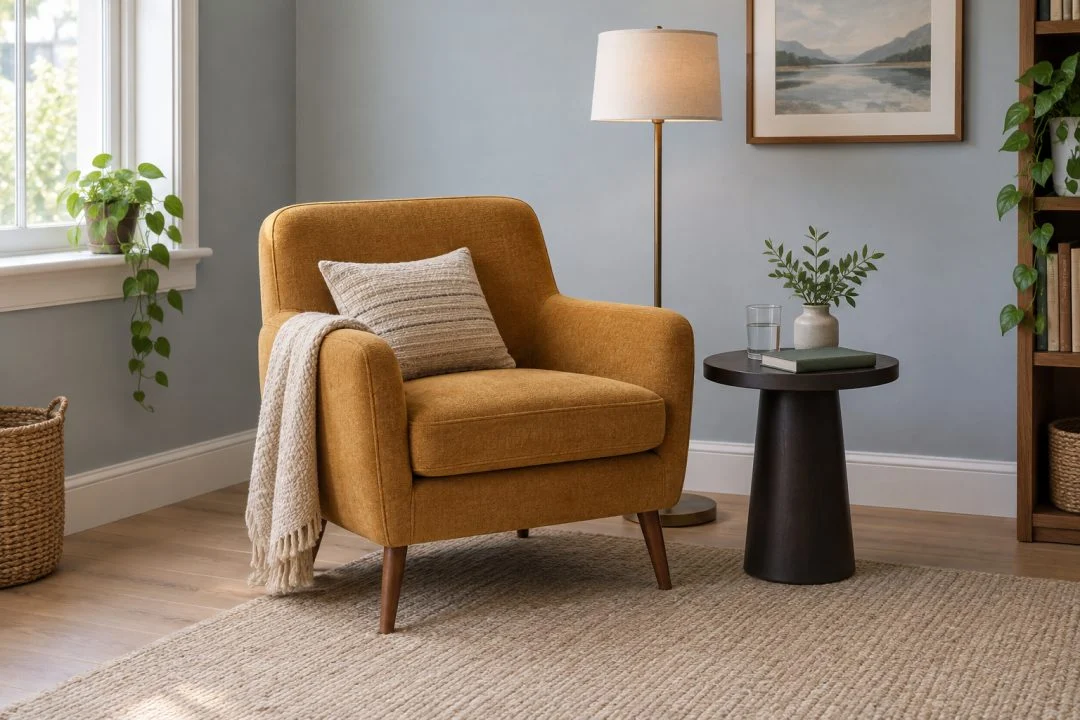
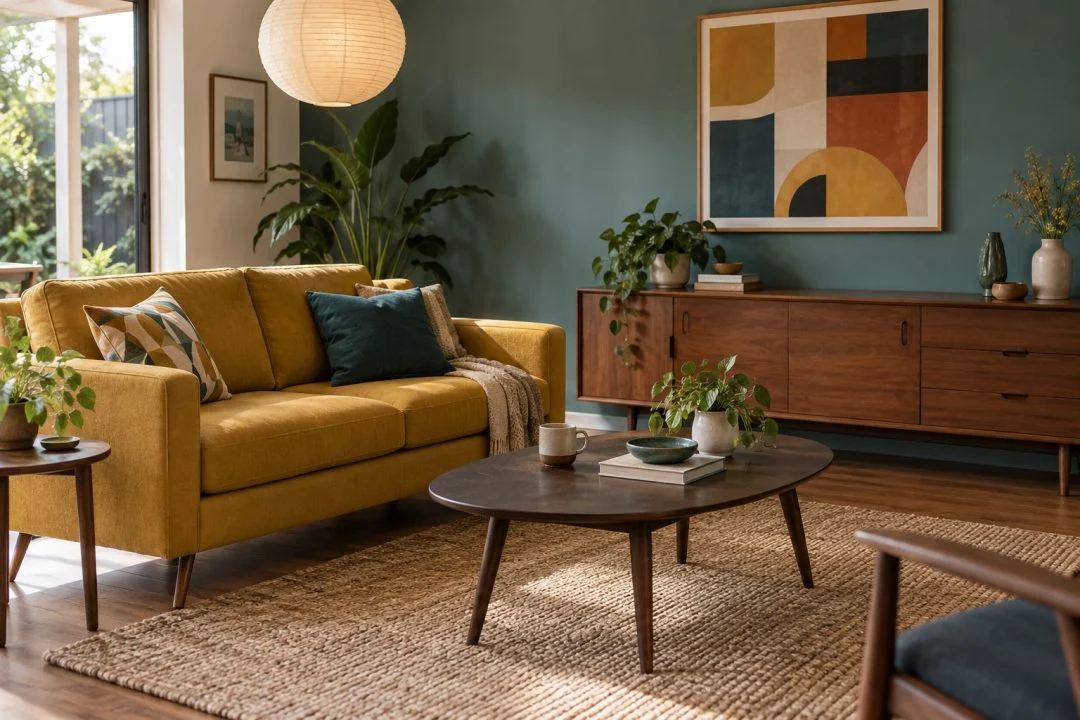
In a room with an ordinary neutral sofa, a low timber-look sideboard might be enough to establish the direction. In another room, a mustard or olive chair could do it. A collection of statement shapes can become busy surprisingly quickly.
Check the practical details behind the outline. Raised legs make the floor more visible, but the furniture still occupies its full footprint. A very low cabinet may not suit the storage or equipment you need. Use the sideboard and console comparison to choose the right job for the piece.
A room recipe using what stays
- Keep the comfortable sofa. Plain grey, cream or brown gives you room to work with other finishes.
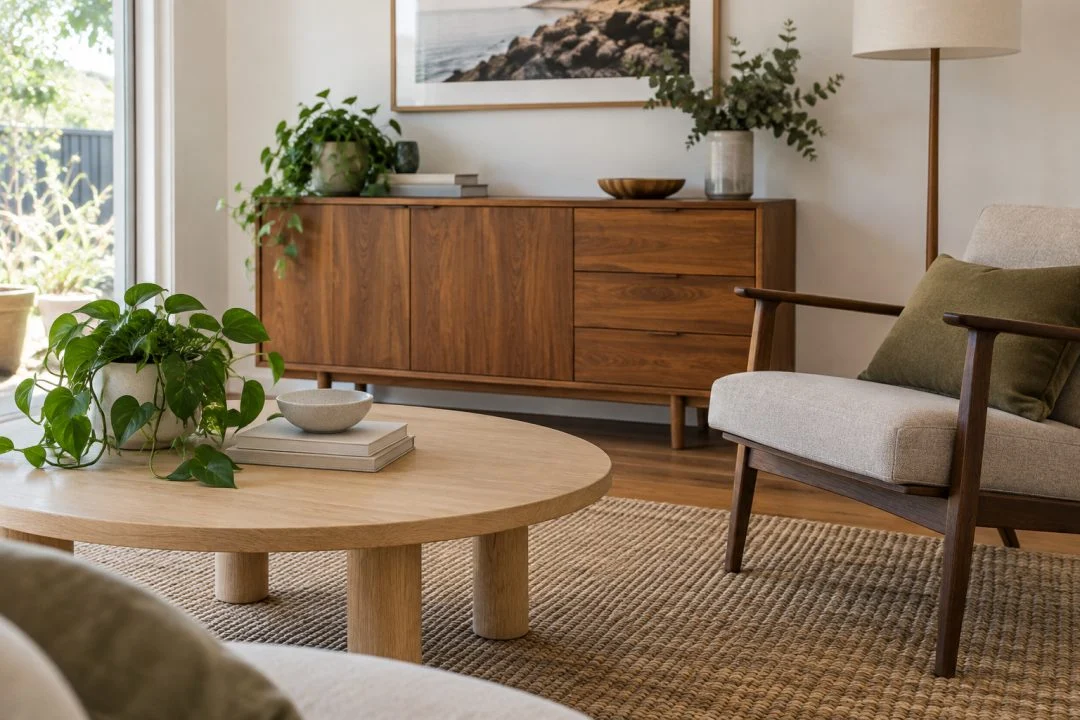
- Choose one warmer timber tone. A table or cabinet can provide it. Read the specification rather than assuming a walnut colour means solid walnut.
- Add a controlled colour. Try mustard, muted teal or rust in one chair or a small textile you already own.
- Repeat a shape or dark detail. A curved table edge might connect with a chair; dark legs can connect separate pieces without an exact finish match.
The aim is a relationship between the furniture, not a period set. Leave room for a piece with a different history if it works well and you enjoy it.
The inexpensive mistake to avoid
Do not buy a chair simply because it looks excellent from the side. Seat height, depth and arm position matter when you use it. Check its dimensions against a chair you already find comfortable, then consider the care requirements and the space around it. Our accent-chair guide walks through that choice.
For an existing room, begin with one addition and assess it in place. If the timber tones seem disconnected, mixing them deliberately is usually more achievable than finding a near-identical match online. A room that develops gradually can feel more personal than one assembled from a single photograph.