How to Mix Timber Tones Without a Matching Furniture Set
Mix timber-looking furniture through undertones, contrast and repeated details. Build a coherent room without buying every piece in the same finish.
Two timber-looking pieces do not have to match to work together. In fact, an obvious difference can be easier to use than two finishes that are almost the same.
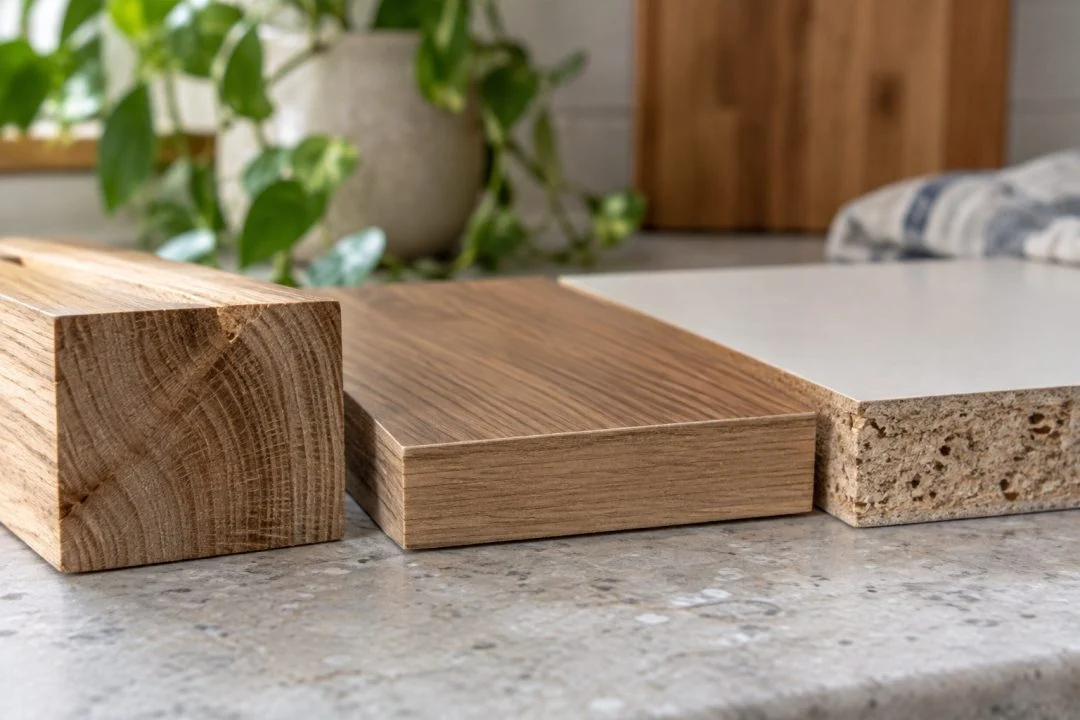
Lay out photographs or samples with the floor included. Look beyond “light” and “dark”: notice whether each finish feels golden, reddish, grey or neutral, how strong the grain looks and how reflective the surface is.
Three combinations to try
Pale and warm
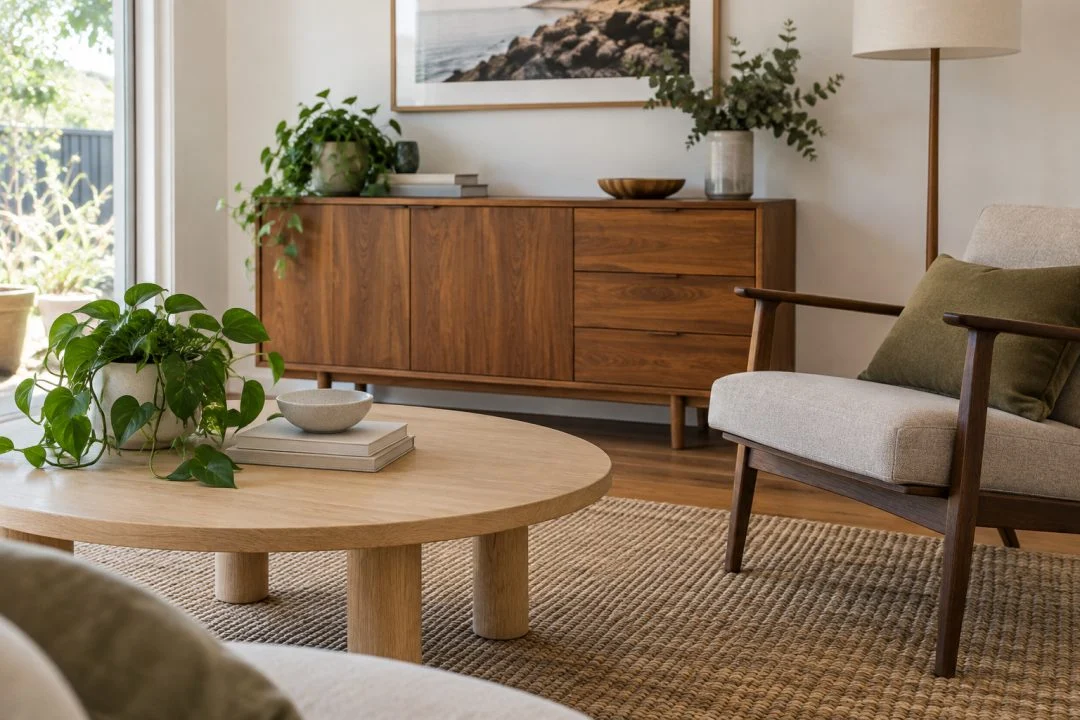
Put a pale table beside a medium warm cabinet. Use a neutral upholstered seat between them to give the eye a break. This can work when the two finishes differ enough to look deliberate, rather than like an unsuccessful match.
Light and distinctly dark
Pair a light floor or table with a dark cabinet or chair frame. Repeat the dark note somewhere small if it feels isolated. Keep an eye on the television and other dark surfaces; they may already provide that connection.
One dominant tone, one guest
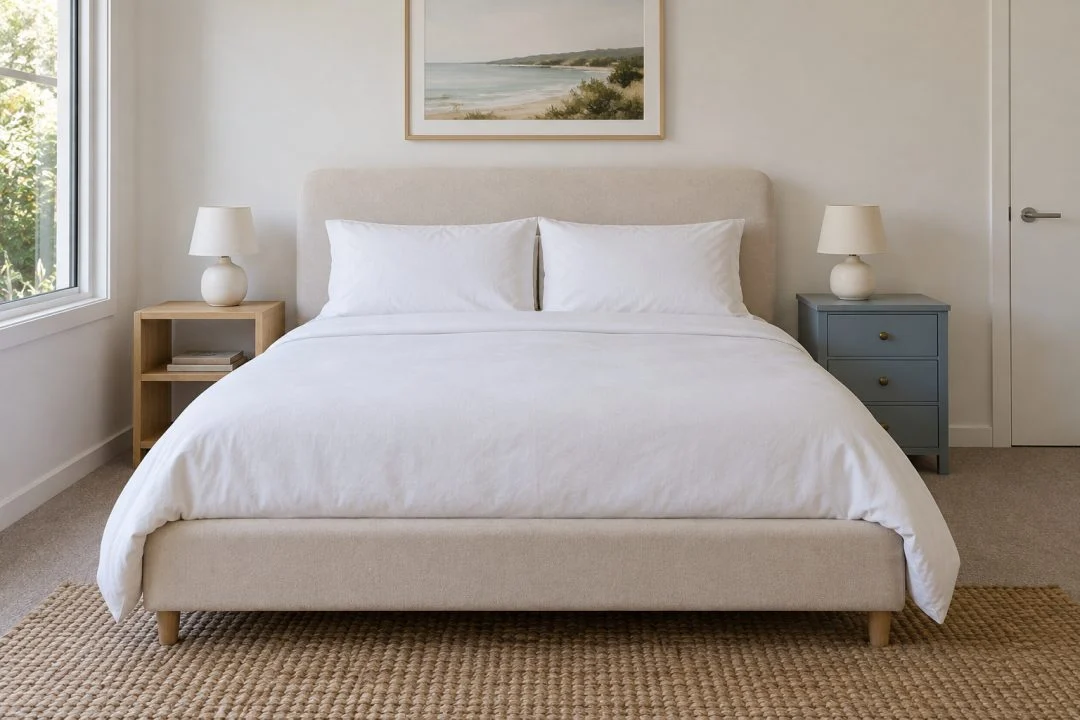
Let the largest timber surface establish the direction, then introduce one contrasting piece. In a bedroom with a substantial timber-looking bed, for example, bedside storage does not need to copy the finish exactly. Similar proportions or a repeated handle colour can help connect the pieces.
Avoid judging from the names alone
Colour names are not a standardised matching system. “Oak” in one listing can look quite different from “oak” in another. A timber species or timber-look name also does not establish the construction; use the material specification for that.
Compare the real samples where available, at different times in the room. If you cannot obtain a sample, use all available product images and ask about the finish before making a close-match purchase. Screen settings and lighting can affect what you see.
What if the existing pieces clash?
Try separating them with a plain upholstered piece or a little space. Remove competing decorative colours and look again. You may need a clearer relationship, not a replacement for furniture that already works.
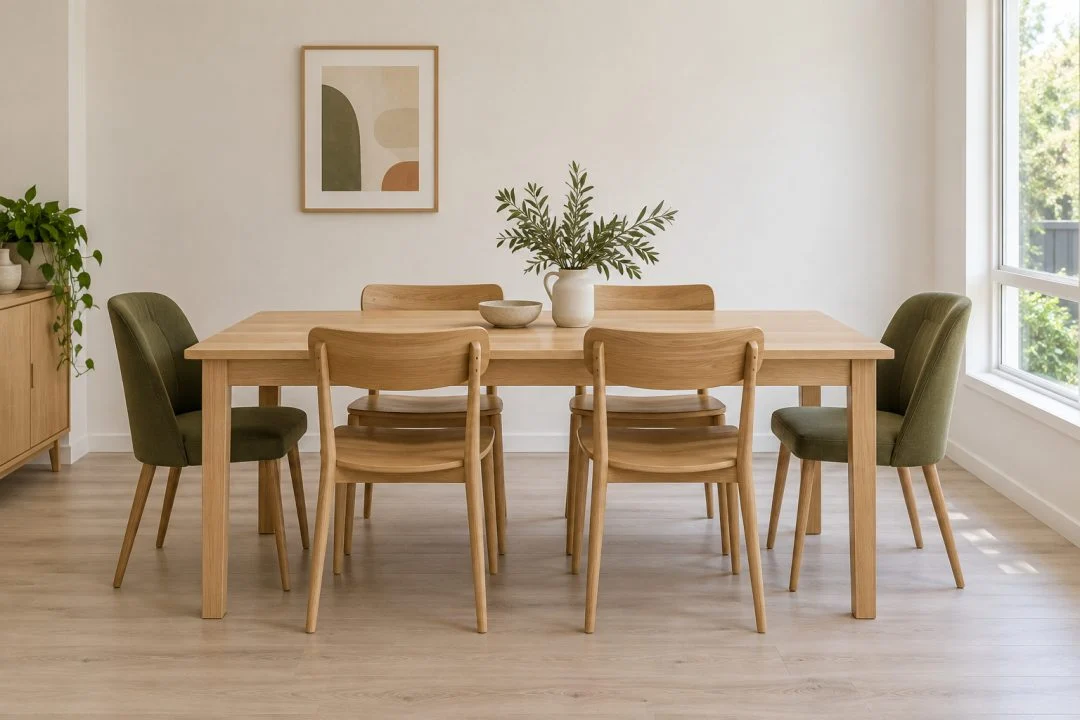
For dining rooms, mixing chairs deliberately gives you another way to connect shape and colour. In bedrooms, coordinating separate pieces can be more flexible than buying a matching suite.
Keep the final test simple: does the combination look intentional to you in the room, and does the furniture do what you need? Perfectly identical grain is not a requirement.