Buffet, Sideboard or Console Table: Which Do You Need?
Compare buffets, sideboards and console tables by depth, storage and use. Measure the actual product instead of relying on the furniture name.
Buffet, sideboard and console are overlapping furniture names, not three neatly regulated categories. Sellers use them differently. The quickest way to choose is to describe the job you need done, then compare the actual dimensions and storage.
If you need dining storage
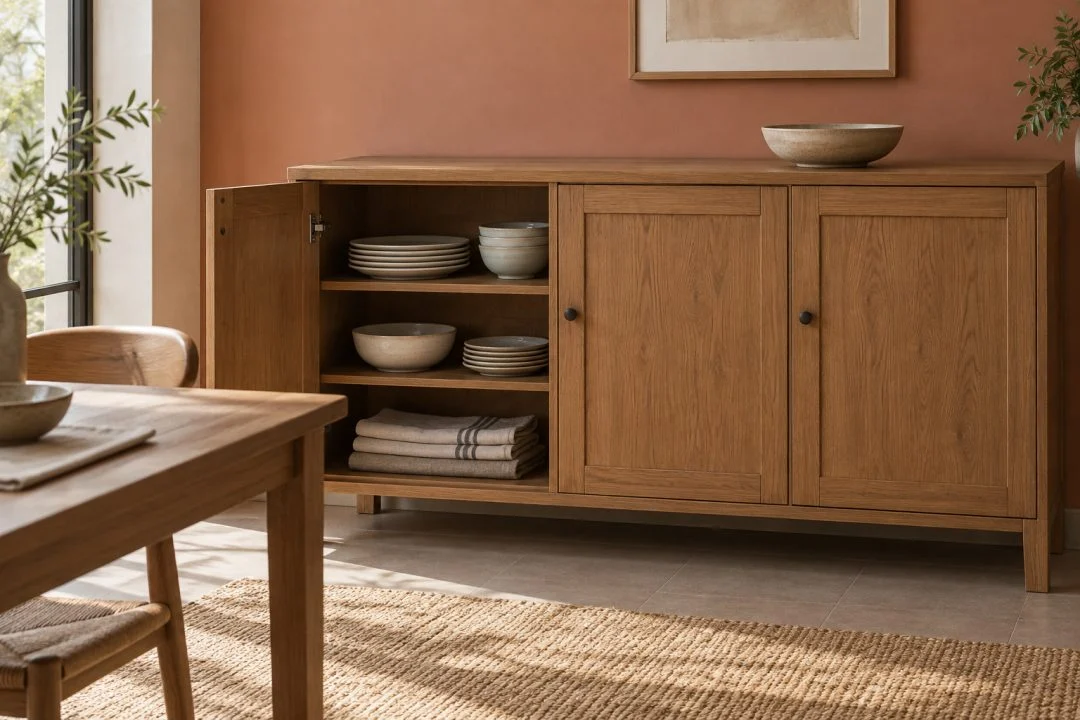
Look for enough usable space for the items you own: dinner plates, serving dishes, table linen or glassware. Internal shelf dimensions matter more than the cabinet’s outer width. A large platter can be the awkward item that decides the shortlist.
Check whether shelves adjust, what loads are stated and how far the doors open. If you want to use the top for serving, follow its surface-care and heat-protection guidance. The word “buffet” does not establish that every finish can take a hot dish.
If you need an entry surface
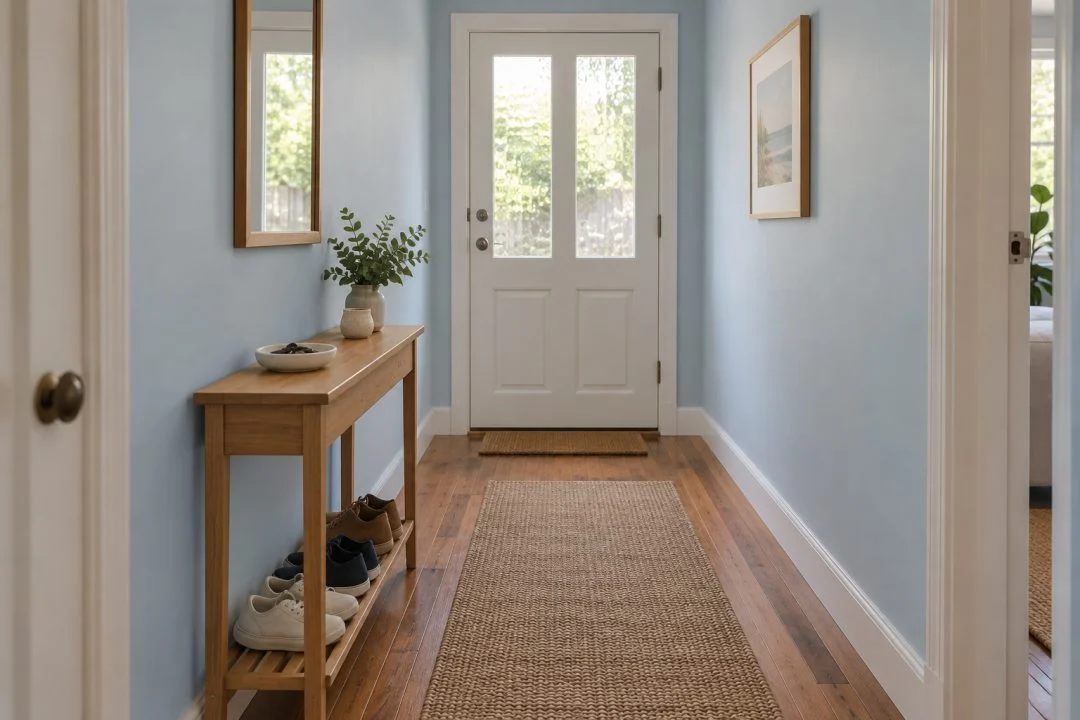
A console may provide a convenient place for keys or a small lamp without the depth of a larger cabinet. Measure the whole piece, including legs, handles and the objects that will sit on it.
In a narrow space, test the door swing and the route past it. Our hallway measuring guide helps compare open and closed positions. A table that looks delicate can still obstruct a passage.
| Your main job | Feature to prioritise | Measurement to check |
|---|---|---|
| Hide everyday clutter | Enclosed compartments | Usable internal width, depth and height |
| Store dining pieces | Shelves or drawers suited to the contents | Largest platter, stack or linen bundle |
| Put keys and a lamp near the door | A practical surface and suitable cable route | Total projection into the passage |
| Display a few objects | Appropriate surface and shelf capacity | Object height and stated load limits |
Opening space is part of the footprint
A cabinet can fit perfectly against a wall and still be inconvenient if its doors meet the dining chairs. Tape the body outline on the floor and mark the doors or drawers at their open positions.
Think about frequency. A drawer used every day deserves easier access than storage opened only occasionally. Avoid buying more volume at the expense of reaching the things you use most.
Choose the construction for the job
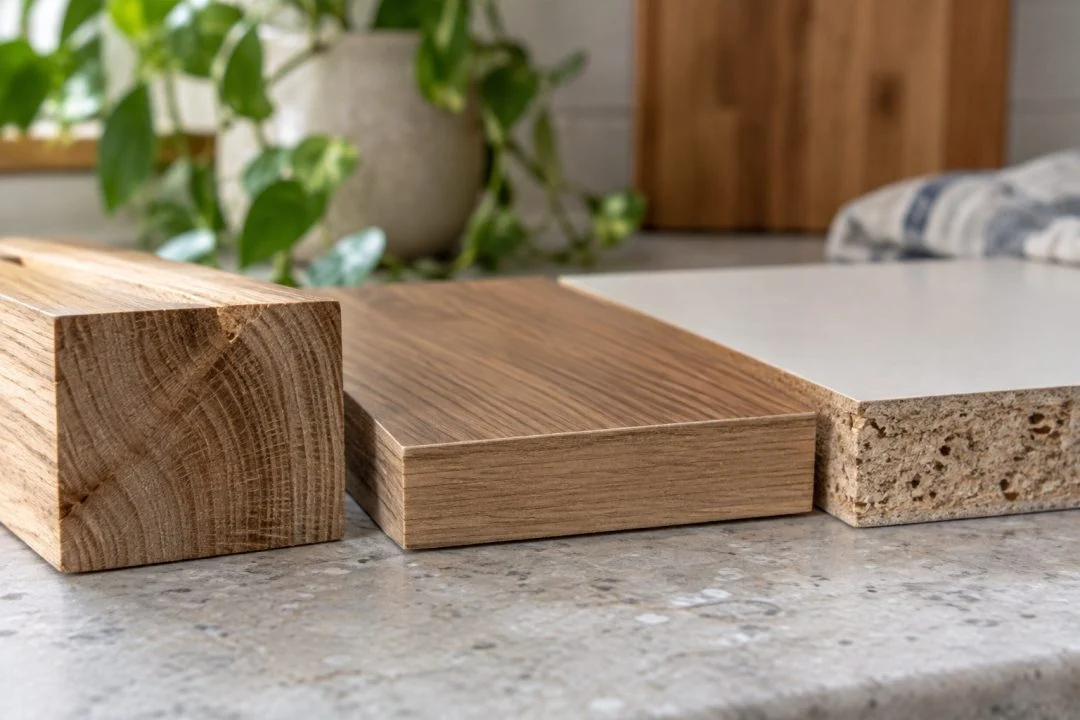
Read the material and finish descriptions separately. A timber-look cabinet may have a different construction from a veneered or solid-timber piece. The cabinet-material guide explains the terms without treating one name as an automatic quality ranking.
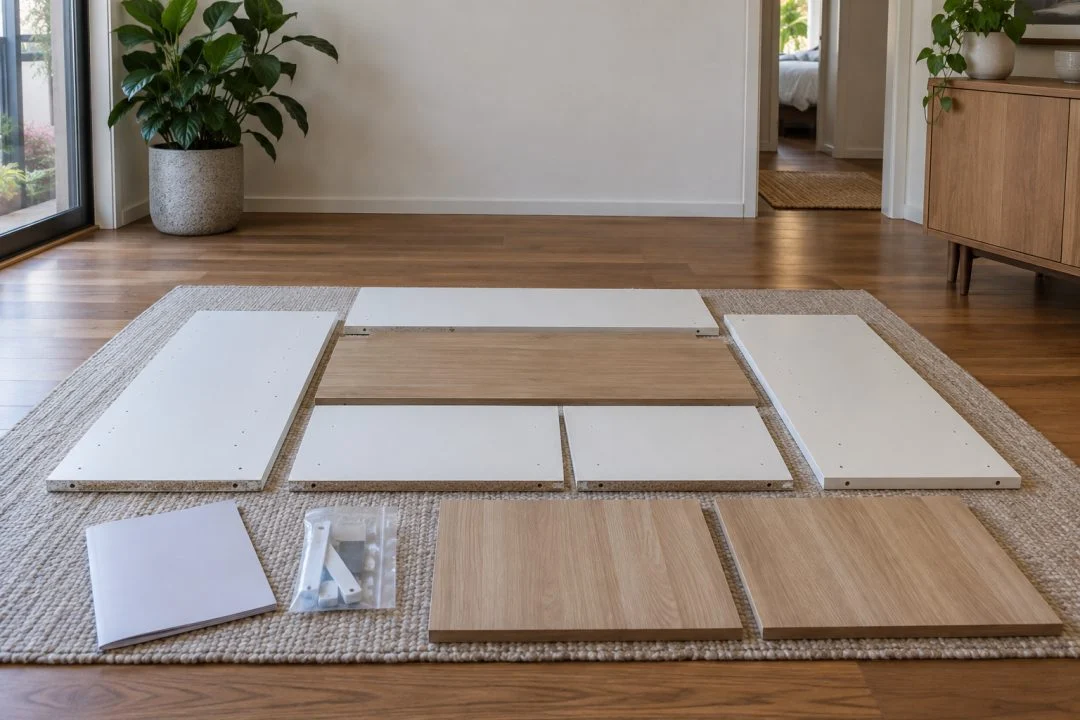
Follow the furniture’s assembly, loading and anchoring instructions. For help planning the installation, use the furniture anchoring checklist. The cabinet’s intended purpose matters too: do not assume a dining sideboard is suitable as a television stand.
Once you know the job, internal capacity and opening space, the label becomes much less important. Choose the piece that stores the right things and lets the room keep working.