Accent Chair Size Guide: Fit, Seat Height and Placement
Choose an accent chair by overall footprint, seat dimensions and room placement. Check side-table access and movement around the chair.
An accent chair earns its place when someone actually wants to sit in it. Before choosing a colour, decide whether it is a reading seat, part of the main conversation area or an occasional extra chair.
That job helps you judge the right dimensions. A generous chair can be lovely for reading but awkward in the gap beside a sofa. A compact occasional seat may suit visitors without being the place you choose for a long evening.
Start with the whole chair
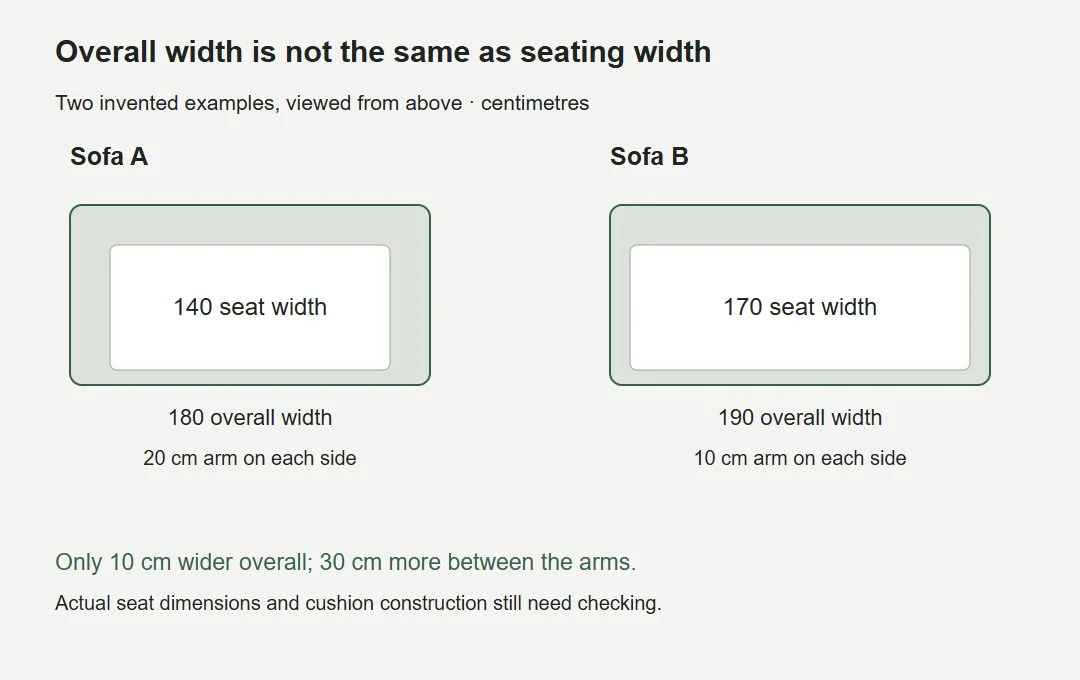
Record overall width, depth and height, then mark the width and depth on the floor. Curved backs, flared arms and angled legs can extend beyond the apparent seat area. Use the widest listed dimensions rather than the cushion width alone.
Check the footprint in its intended position. Turning a chair diagonally changes the area it occupies. A square outline that fits flat against the wall may project farther into the room once you angle it towards the sofa.
If the chair swivels or reclines, confirm the operating space for that model. Do not infer either feature from its shape or base. Moving furniture needs more consideration than a static rectangle.
Then compare the seat
Seat height and seat depth help you compare the chair with furniture you already find comfortable. Measure an existing seat as a reference. Keep in mind that cushion compression, back angle and arm placement change the experience, so matching numbers cannot guarantee a matching feel.
Consider who will use it and how easily they can sit down and stand up. Very low or deep furniture may suit some people and be inconvenient for others. Choose around the household rather than a photograph’s proportions.
Three useful places to test
Facing into a conversation
Angle the chair towards the sofa without cutting across the main walking route. Check that it has a comfortable relationship with the nearby table. If you are deciding between a larger sofa and a separate seat, compare the complete arrangement in our two-seater versus three-seater guide.
Beside a reading light
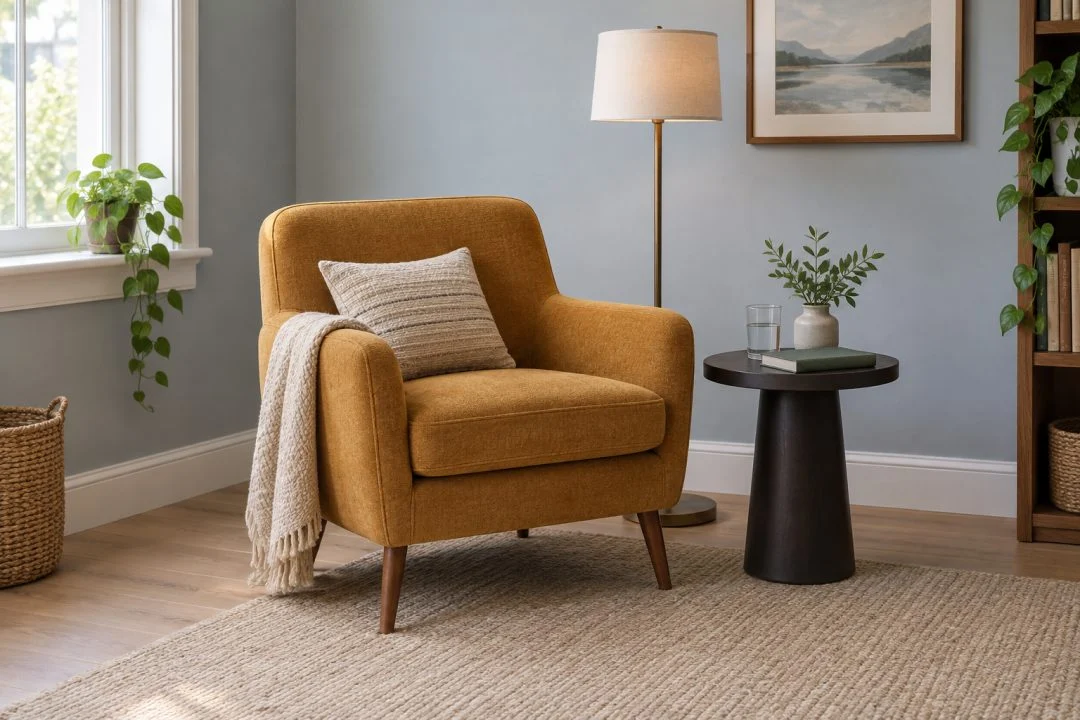
Leave a practical spot for a book and drink, and place the light where it supports the task. Keep cords out of walking routes. Test whether you can reach the side table without leaning awkwardly over a broad arm.
As an occasional extra seat
Choose somewhere the chair can live between visits without becoming a storage pile or blocking a cupboard. If you plan to move it regularly, check its weight and handling instructions. “Occasional” should describe how often it is used, not how often it is in the way.
A small footprint card
Overall width × depth; seat height and depth; arm height; any movement clearance; access to the nearby table; clear route past the chair. Keep this beside the product name when comparing options.
Give the chair the right neighbour
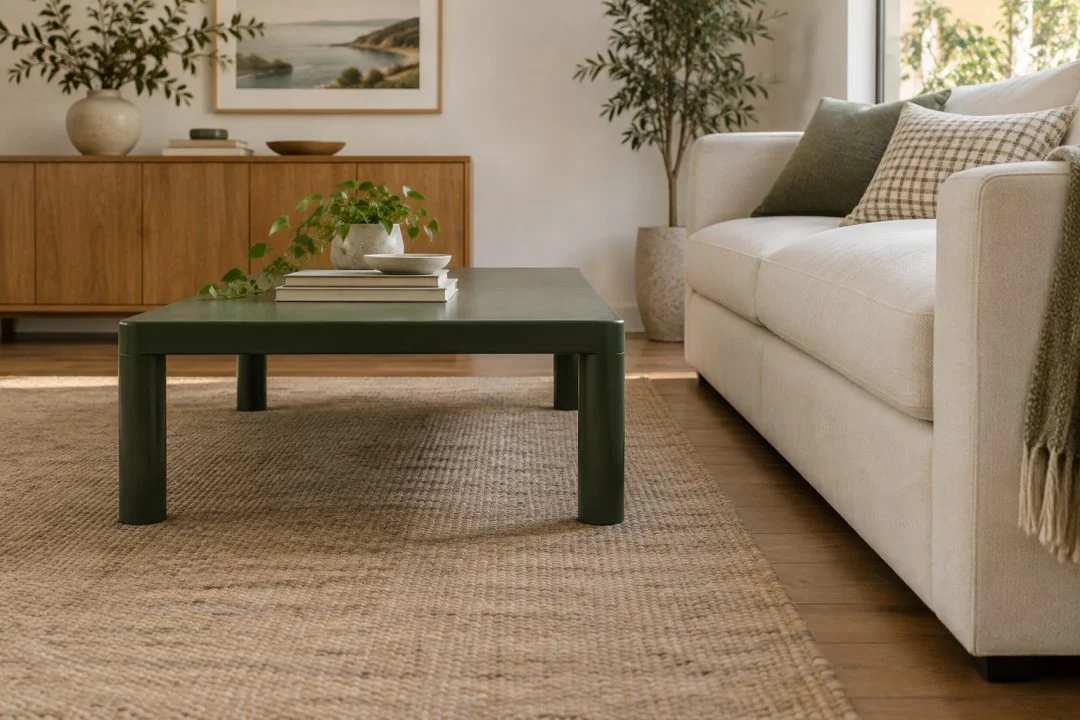
A side or coffee table can make the seat more useful, but its dimensions need to suit the arrangement too. The coffee table size guide explains how to compare reach, height and the space between pieces.
You may already own the right table or lamp. Try the chair position with those first. One carefully placed seat can complete a corner without turning it into another whole-room shopping project.