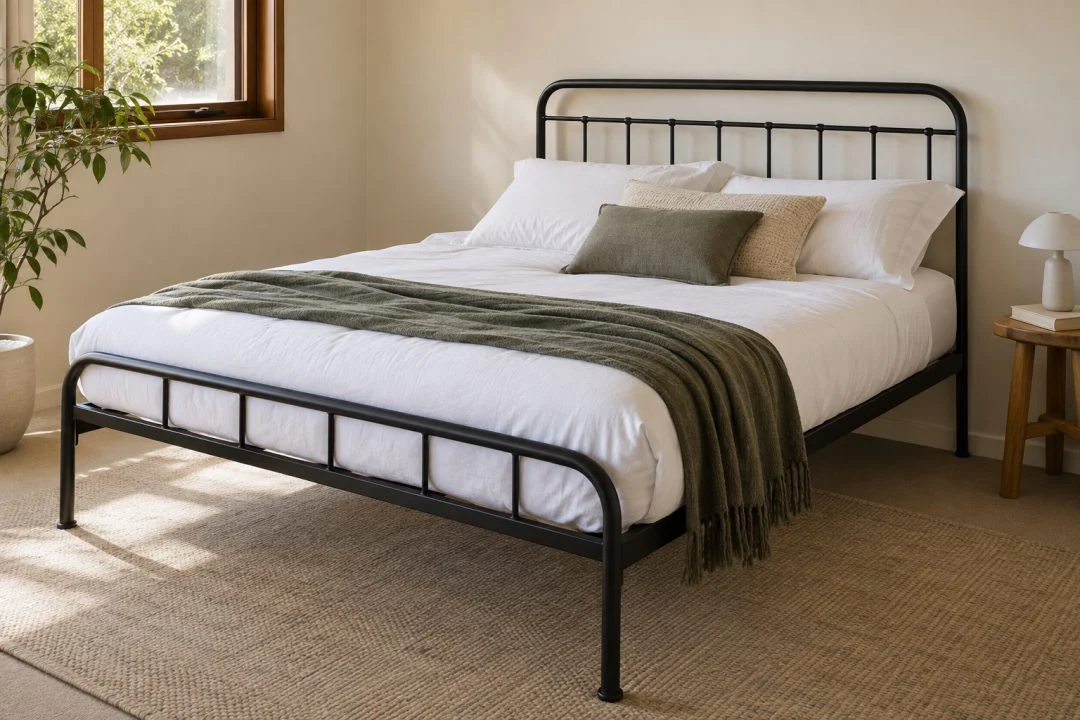
Bedhead Size and Height: Proportion Without Guesswork
Choose a bedhead by attachment, width, height and room proportions. Check compatibility before using it to change the look of a bedroom.
A headboard can give a plain bed a more finished look without replacing everything around it. The trick is getting its height and width right with your mattress, pillows and room, rather than judging it alone in a product photo.
Start at the top of the mattress
The advertised headboard height may be measured from the floor. What you notice in the room is how much remains above the mattress and bedding.
For an invented example, a headboard 120 cm high behind a sleeping surface 60 cm above the floor leaves 60 cm visible before pillows. Put it behind a sleeping surface 70 cm high and only 50 cm remains. A deep mattress can change the look considerably.
Measure your assembled bed, including the mattress you will use. Then try a paper outline on the wall using a surface-safe method. Add your normal pillows. This is more revealing than comparing isolated product pictures.
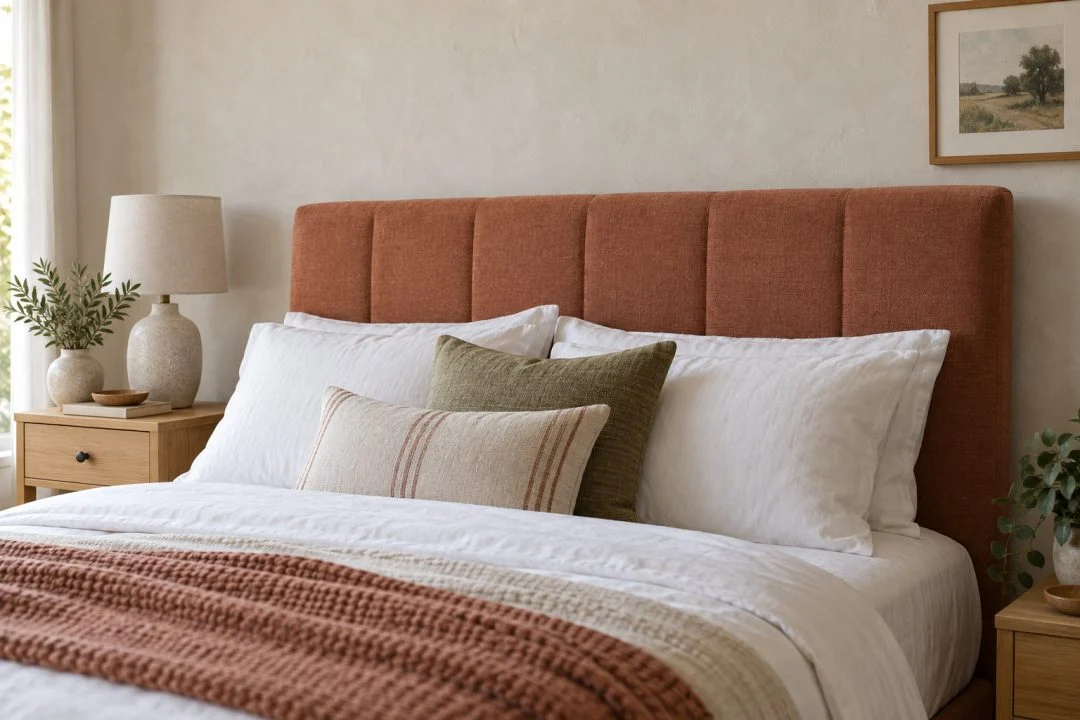
Should it stop at the bed or extend beyond it?
A headboard close to the bed width creates a compact shape. A wider design can visually connect bedside tables, but also occupies more wall and may conflict with switches, power points or curtains.
Check the maximum width, especially on winged designs. Leave usable access to the things you need beside the bed. A headboard that looks generous in a studio photograph may dominate a smaller wall.
Check how it attaches before choosing the finish
Some headboards connect to a compatible base, some require wall mounting, and others form part of a complete frame. These are not interchangeable installation methods. Verify the fitting type, attachment positions, supplied components and compatibility with your base.
Do not rely on the mattress to hold a headboard in place unless that is explicitly its intended installation. Follow the maker’s instructions and obtain suitable installation help where required. If you rent, check permission requirements before planning wall fixings.
Let the surface suit your routine
An upholstered headboard adds a broad textile surface. Consider the colour in daylight and evening light, and read the care instructions. A timber-look surface creates a different outline and cleaning routine; its finish and construction still matter.
You do not need matching bedside furniture. Repeat one colour, shape or timber tone and let the headboard be the main feature. Bedside-table proportions and coordinating bedroom furniture help pull the combination together.
If the base also needs replacing, compare the total cost and compatibility of separate pieces with a complete bed. The bed-frame guide covers that wider decision. A headboard is a useful update only when it fits the bed as well as the wall.