Do Bedroom Furniture Pieces Need to Match?
Mix a bed, bedside tables and drawers through repeated colour, material and proportion. Keep useful pieces rather than buying a complete matching set.
No. A bedroom can feel settled without every piece coming from the same range. Matching furniture is one straightforward route; repeating a few deliberate details is another.
The aim is to make the pieces look as though they belong together while letting them do different jobs.
The easy route: a matching bedside pair
Keep the two bedside tables alike and let the bed or chest have a different finish. The repeated pair gives the room a clear rhythm without requiring a full suite.
This works particularly well when the bed is already a feature. A padded headboard, strong colour or broad timber surface may be enough visual interest for the room. The bedside pair can stay simple.
The useful route: different tables with a shared detail
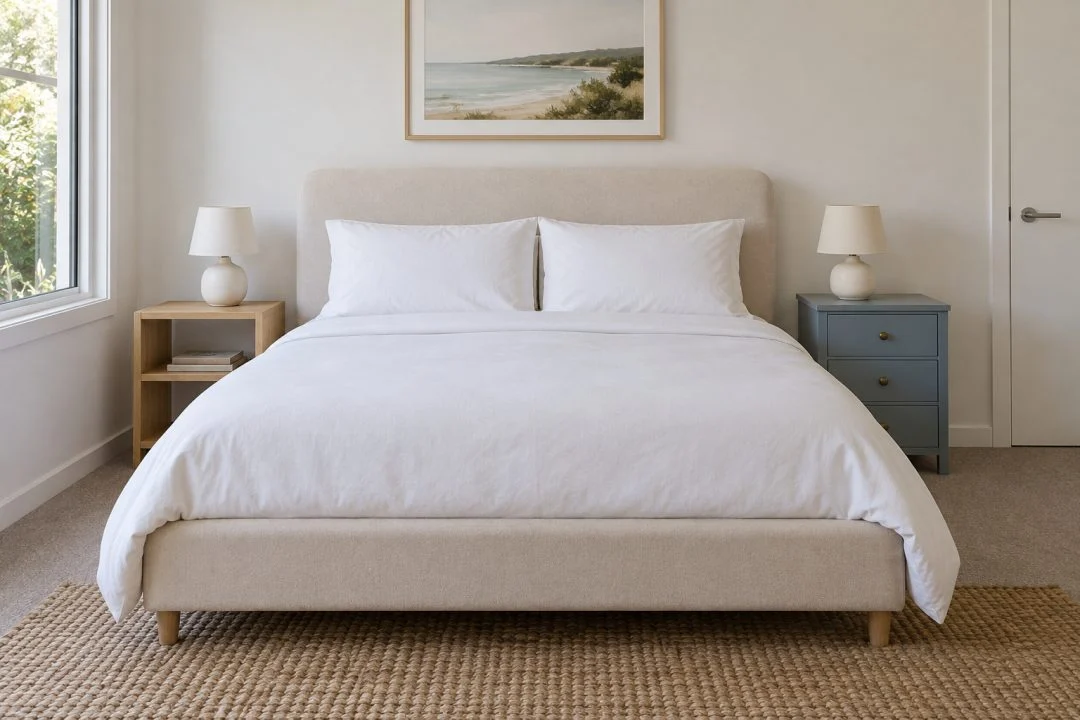
One person may want drawers; the other may prefer an open shelf. You can accommodate both and still connect the two sides.
Start with similar top heights relative to the mattress, then repeat a detail: lamps, a handle colour or a common rounded shape. In the illustrative room above, matching lamps connect a timber table and a painted cabinet.
Keep their scale in balance. One very tall, bulky chest beside one tiny stool can look accidental and may be less practical. The bedside size guide helps resolve the proportions before choosing colour.
The collected route: coordinate the storage
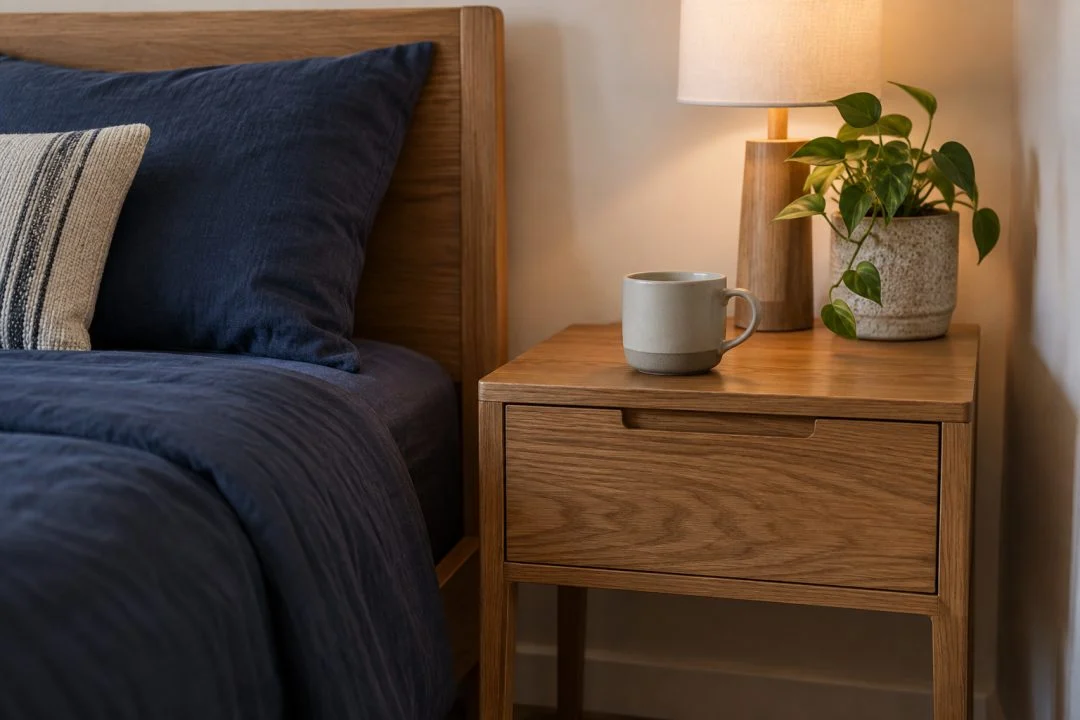
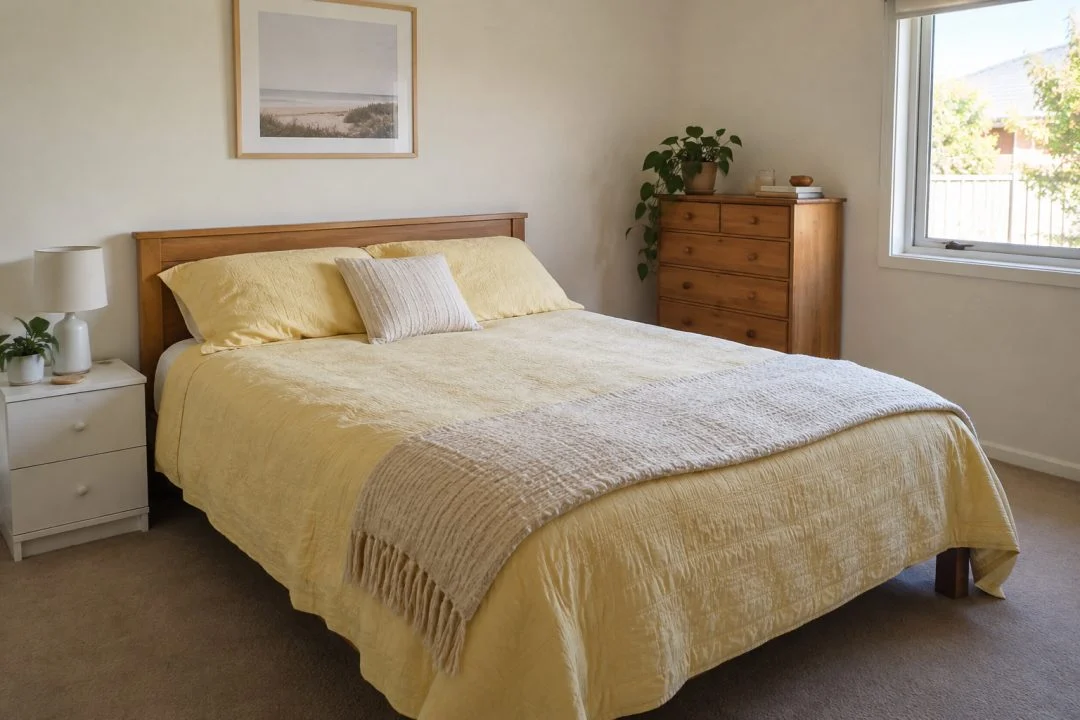
If you already own a bed and dresser in different timber tones, look for a relationship rather than an exact match. A warmer tone in the bedding or a small object may connect them. You do not need to add a third large timber piece just to make a set.
Choose a main timber tone and allow the other to be secondary. Our guide to mixing timber tones explains that approach in more detail.
Try this before replacing anything
- Remove the loose objects from the main surfaces.
- Look at the bed, bedside furniture and storage as shapes.
- Choose one detail to repeat between the pieces.
- Put back the objects you use, then add only the decoration that helps.
Sometimes the apparent mismatch comes from competing lamps, clutter or too many small colours rather than the furniture itself. Give the existing pieces a fair chance in a quieter arrangement.
If a purchase would improve the room, the A$700 bedroom-refresh plan shows how to concentrate a budget on selected changes. A coordinated bedroom can develop over time; there is no need to replace every useful piece in one order.