How to Mix Dining Chairs Without a Matching Set
Mix dining chairs through shared proportions, timber tones and colour. Try three simple combinations without replacing the whole set.
You do not need to replace a whole dining set because two chairs have worn out or your taste has changed. A mixed set can feel deliberate when the chairs share a few clear connections—and still fit the table.
The trick is to decide what repeats before you start shopping. Trying to find six unrelated “interesting” chairs is a much harder project than keeping one shape, colour or material in common.
Three combinations that are easy to build
One shape, two colours
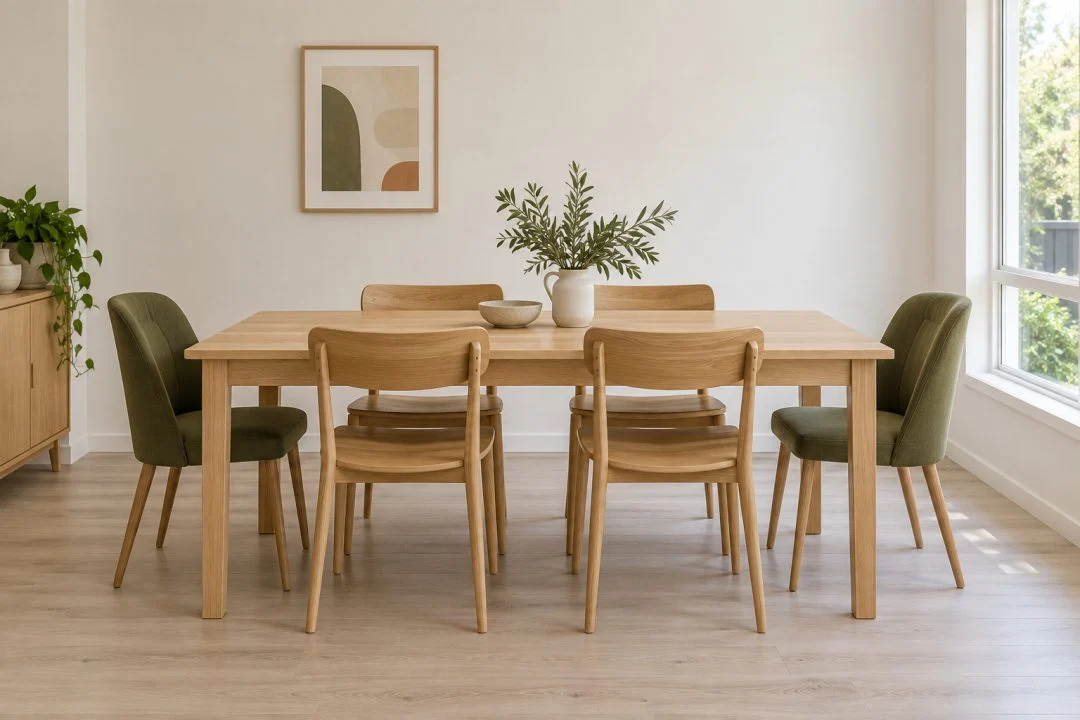
Use the same chair design in two finishes or upholstery colours. The repeated silhouette supplies the consistency, so the colours can provide the contrast. A pair in a different shade can look intentional at the ends of a rectangular table or opposite each other around a round one.
Check that the model really is the same size across the options. Similar photographs are not a guarantee that the frame, seat height or pack quantity is identical.
One finish, two shapes
Keep a common visual thread, such as black legs or a warm timber tone, and vary the backs. This is useful when combining existing chairs with a new pair. The finishes need to relate, not pretend to be identical.
If two timber tones are close but noticeably different, a more deliberate contrast may be easier to live with than a near match. Our guide to mixing timber tones looks at colour, grain and the other finishes already in the room.
Simple side chairs, different end chairs
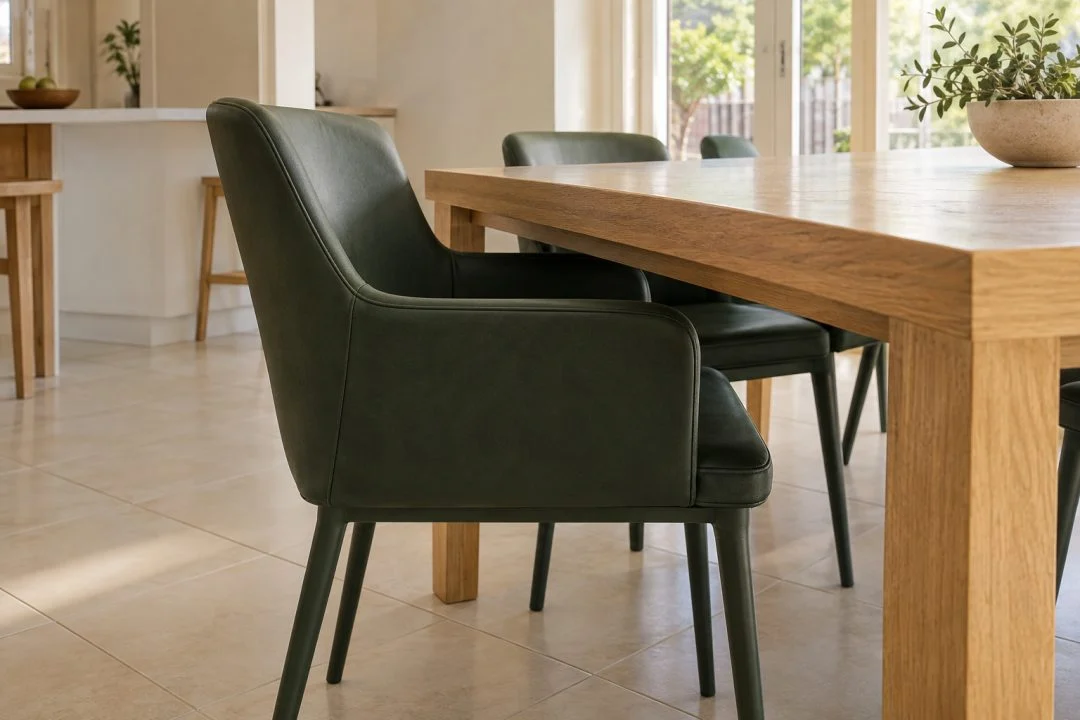
Keep matching chairs down the sides of a rectangular table and use a distinct pair at the ends. Upholstered end chairs can add softness to a timber setting, while a different back shape gives the arrangement some variety without changing every seat.
This layout also lets you keep useful chairs you already own. It does not work merely because a photograph looks balanced: the end seats still need legroom and enough space behind them.
Keep one thing quiet
If the chairs vary in both shape and colour, let the tabletop or the surrounding finishes be simpler. If the table is already visually busy, repeating one chair design may be enough variation for the room.
Compatibility comes before coordination
Seat heights do not have to look identical to be comfortable, but each seat needs to work with the tabletop and apron. Compare seat height, overall width, arm height and the space between the table legs. Thick upholstery can change how a seat feels when occupied, too.
Read our chair-to-table compatibility guide before finalising the mix. A beautiful end chair that cannot tuck in may occupy the walkway permanently. A wider chair can also turn a comfortable three-seat side into a cramped one.
Think about who uses each position. Do not assign someone an awkward seat simply because that chair completes the colour arrangement. A mixed set gives you choices; use them to make the table work better.
Test the mix away from the product grid
Place the existing chairs around the table, then use their dimensions to judge the new pair. Look at the dining area from the doorway as well as from above. Back heights are more obvious from across the room; leg finishes often stand out at seated eye level.
Compare colour descriptions and multiple listing photographs. Screen settings and lighting can make a warm grey look beige or a pale timber finish look almost white. If a precise match matters, ask whether a swatch or clearer finish information is available before ordering.
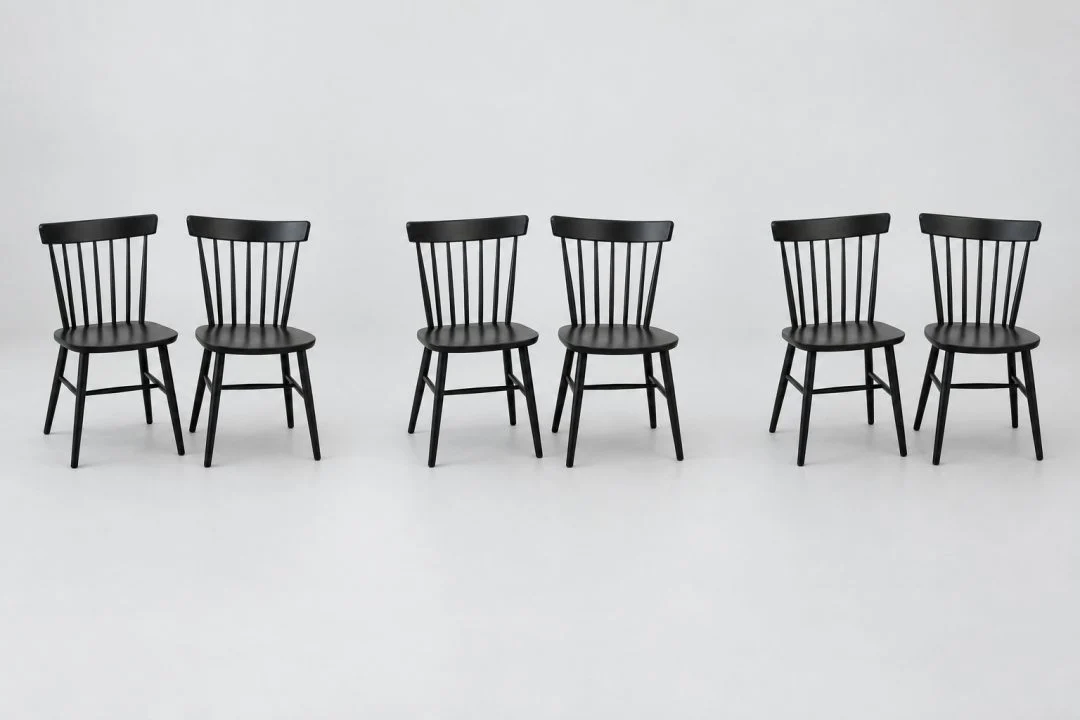
Finally, count packs rather than photographs. A displayed pair may be one sale unit; another listing may be priced per chair. Check the number of chair packs you need so the mixed set arrives in the quantities you planned.