Living Room Toy Storage That Works with the Furniture
Plan toy storage around everyday play, adult seating and easy pack-away routines. Check furniture stability and child-safety details.
In a shared living room, toy storage works best when putting things away is simpler than leaving them on the floor. Start with the toys that are used there regularly, not the entire collection from every room.
Group small items in suitable containers and give larger pieces an obvious home. Keep the system simple enough to reset at the end of an ordinary day.
Plan three areas
Play: a clear area where toys can be used without blocking essential routes.
Store: a suitable place for the things used most often, with furniture installed and used according to its instructions.
Walk: the route people need through the room even when play is happening.
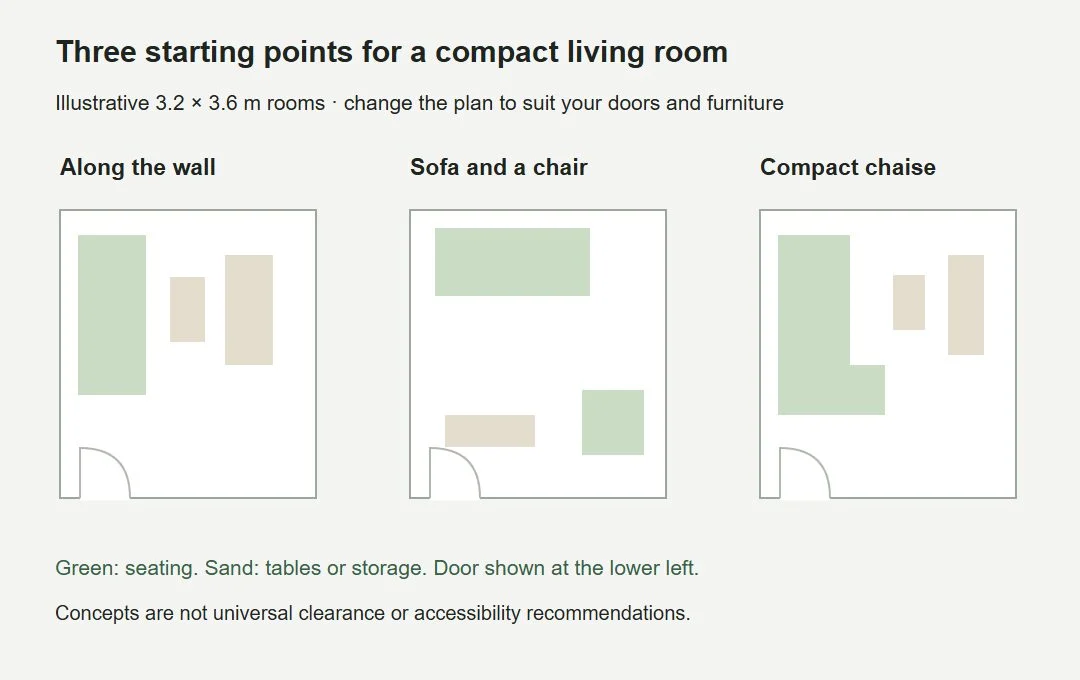
Draw those areas around the existing sofa and tables. In a compact room, the small living-room layouts can help identify a useful open area without moving every piece of furniture.
Choose storage for the contents
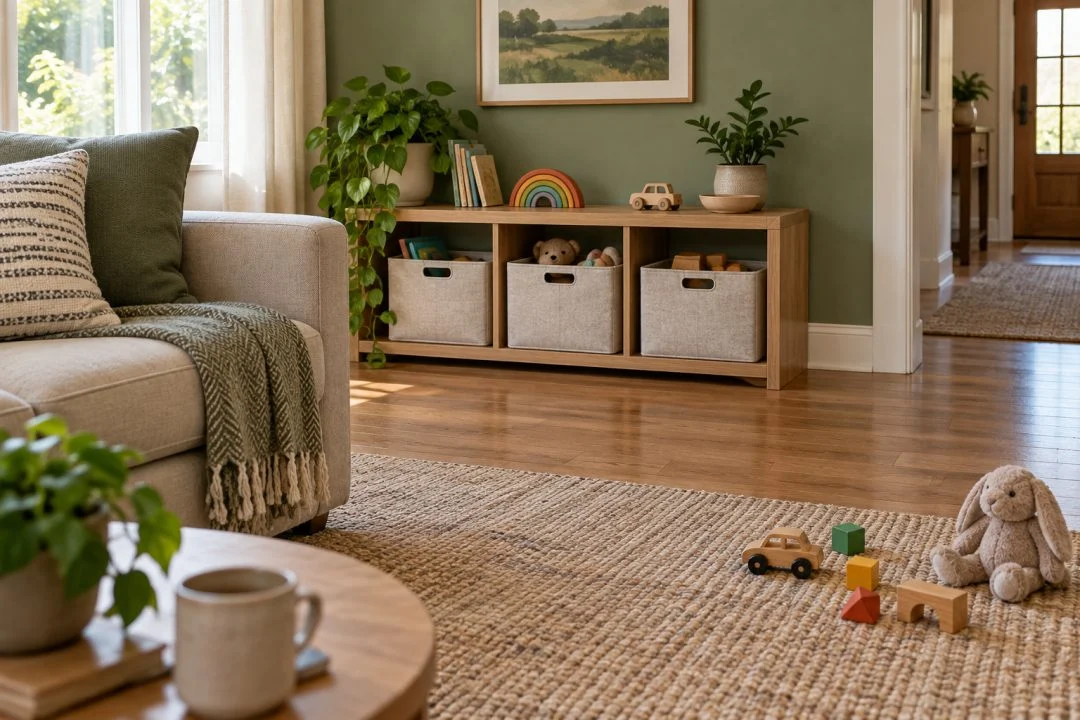
A few separate containers can be easier to manage than one deep box holding everything. Compare usable internal dimensions with the larger toys before choosing the furniture.
Read the product’s intended use, age guidance where relevant, load limits and installation instructions. A general storage ottoman is not automatically a toy box; lids, hinges and access all need consideration. Do not infer child safety from rounded corners or a low profile.
Use the furniture anchoring checklist for freestanding storage. Avoid an arrangement that encourages climbing to reach an attractive toy on a high shelf.
Keep the everyday selection manageable
If the living-room storage is overflowing, move less-used items to another suitable location rather than forcing them into the same container. A smaller everyday selection may be easier to see and put away.
Label or group the containers in a way that makes sense to the household. The categories do not need to be perfect. “Building pieces”, “drawing things” and “soft toys” may be more useful than a complicated system nobody remembers.
The reset test
At the end of the day, can the regular toys go back without rearranging the furniture or emptying one box to fill another? If not, change the storage grouping before buying more containers.
Let it belong to the living room
Simple containers and a restrained furniture finish can sit comfortably with the rest of the room. There is no need to disguise every sign that children live there. Aim for a practical home for the toys and some clear surfaces around them.
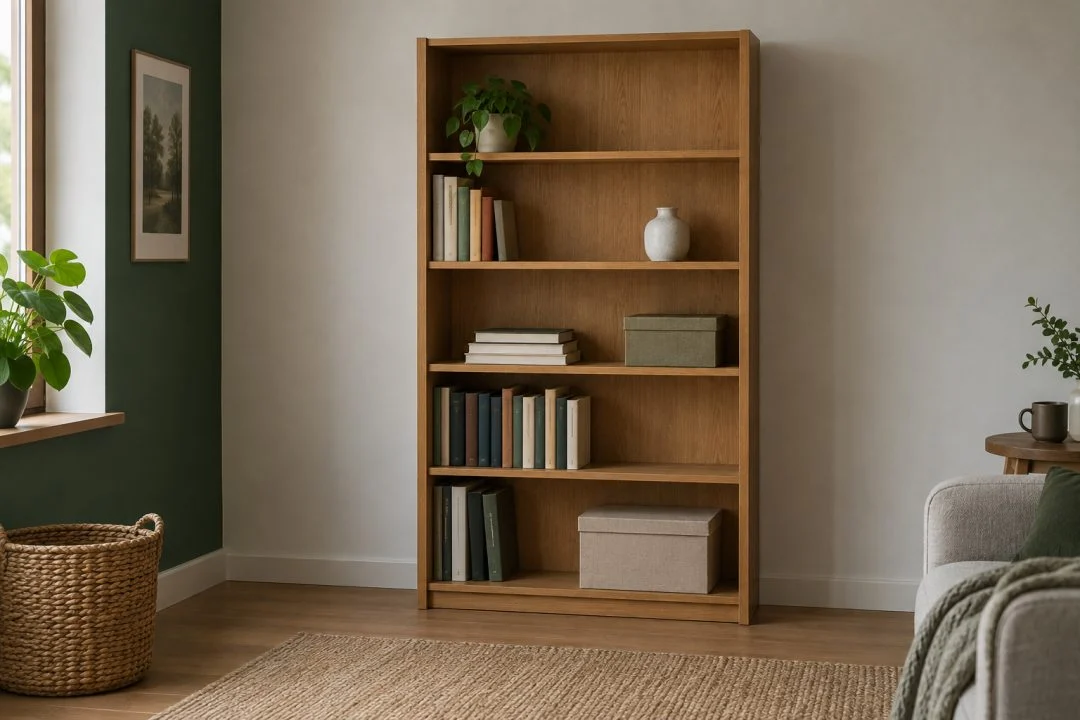
If open shelving is part of the arrangement, organise the shelves around their real contents. Keep decorative objects from making everyday access difficult, and review the setup as the toys and the household’s needs change.