Three Ways to Style a Grey Sofa on a Budget
Refresh a grey sofa with warm neutrals, muted colour or a coastal palette. Keep the sofa and change only the pieces that make a difference.
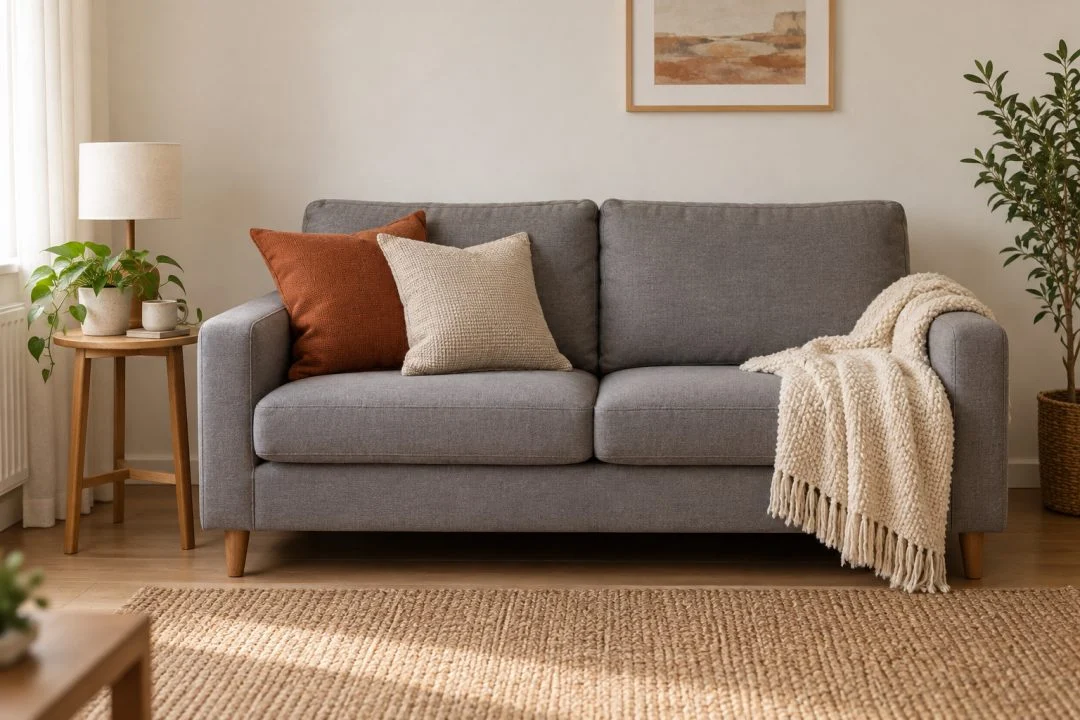
A grey sofa is a useful starting point because it can sit comfortably with several different palettes. Before choosing cushions or a table, look at the grey itself in daylight: does it lean warm, cool, pale or charcoal?
Then choose one direction to try. You do not need to change the floor, repaint the room and replace every accessory to make the sofa feel settled.
Warm grey, timber and clay
Use a warm timber tone near the sofa and repeat a muted clay or rust colour in one or two smaller details. A cushion and an existing print can be enough. Keep another light neutral in the mix so the room does not become uniformly dark.
This approach can work well when your floor or storage already has warm brown tones. There is no need to match every timber finish exactly; coordinate their tones deliberately and let one be the main reference.
Try the colour with something you own before buying. Fold a throw across one arm or move a ceramic piece from another room. Look at it in both daylight and the lighting you use at night.
Olive, charcoal and a little black

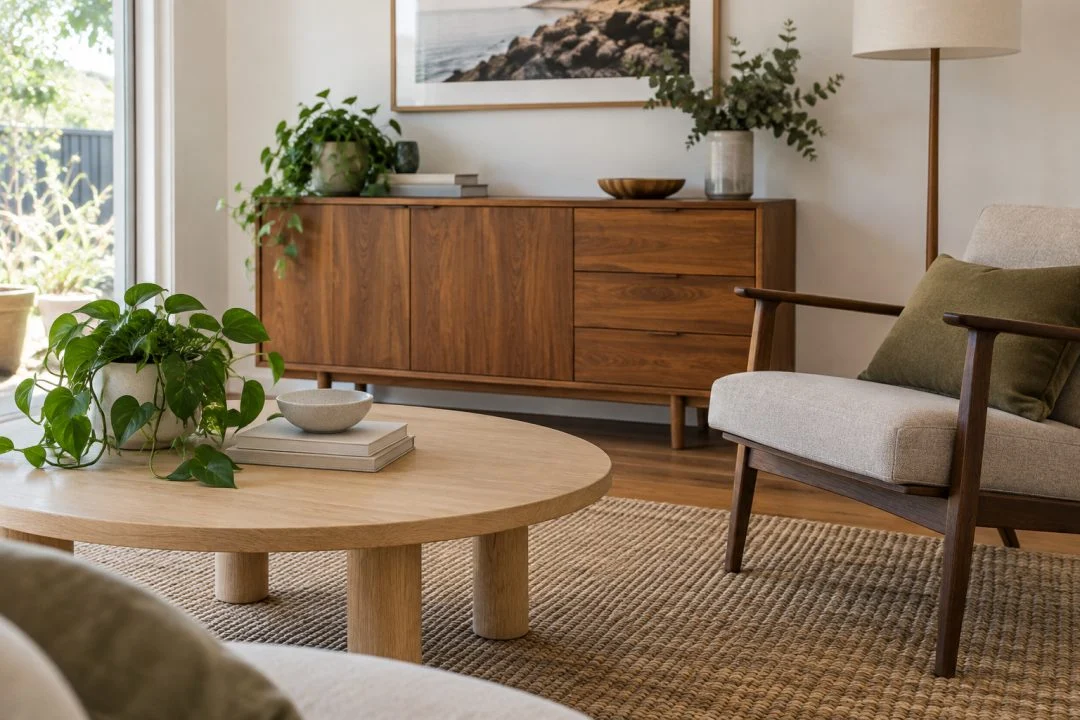
Give the grey sofa a muted green neighbour: an olive cushion or a pale green throw. Use charcoal for a smaller textile and repeat black in a table base or frame rather than adding several more heavy dark pieces.
The contrast comes from proportion. Keep the surrounding wall area light so the green and charcoal remain accents. Texture keeps the palette interesting: smooth furniture, a woven textile and one matte object can provide enough variety.
If the sofa already has textured upholstery, keep some accessories quieter. Not every surface needs to compete for attention.
Grey, washed blue and natural-looking texture

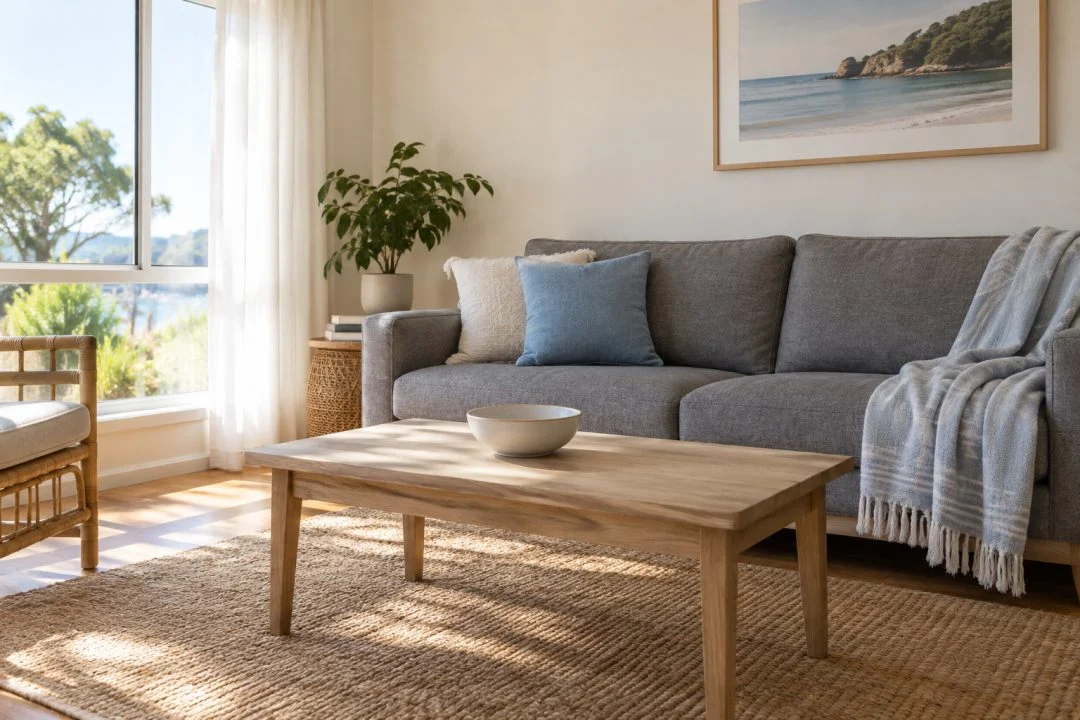
Pair a cooler grey with a restrained blue and a warm-looking texture to stop the combination feeling chilly. That might be a pale timber side table, an existing woven basket or a simple neutral throw.
Keep the blue repeated but limited. Two small touches can connect the room more easily than several unrelated blue objects. If you like a relaxed coastal direction, our coastal-style guide explores the look without relying on nautical decorations.
A small shopping list
Start with one textile change and one useful object or furniture piece, only if needed. Keep the sofa, test the palette and stop when the room feels connected. These are styling ideas, not a requirement to purchase matching accessories.
Choose the useful change
If the room needs a place to put a drink, a side table does more work than another cushion. If the furniture already functions well, changing the arrangement of existing objects may be enough.
Take a quick photograph of the whole room after trying the palette. It can help you notice whether one colour appears only once or whether the sofa feels disconnected from the rest. Adjust with what you own first.
The room-refresh guide offers more ways to make a visible change without replacing everything. A familiar sofa can look quite different when its neighbours have been chosen with a little more intention.