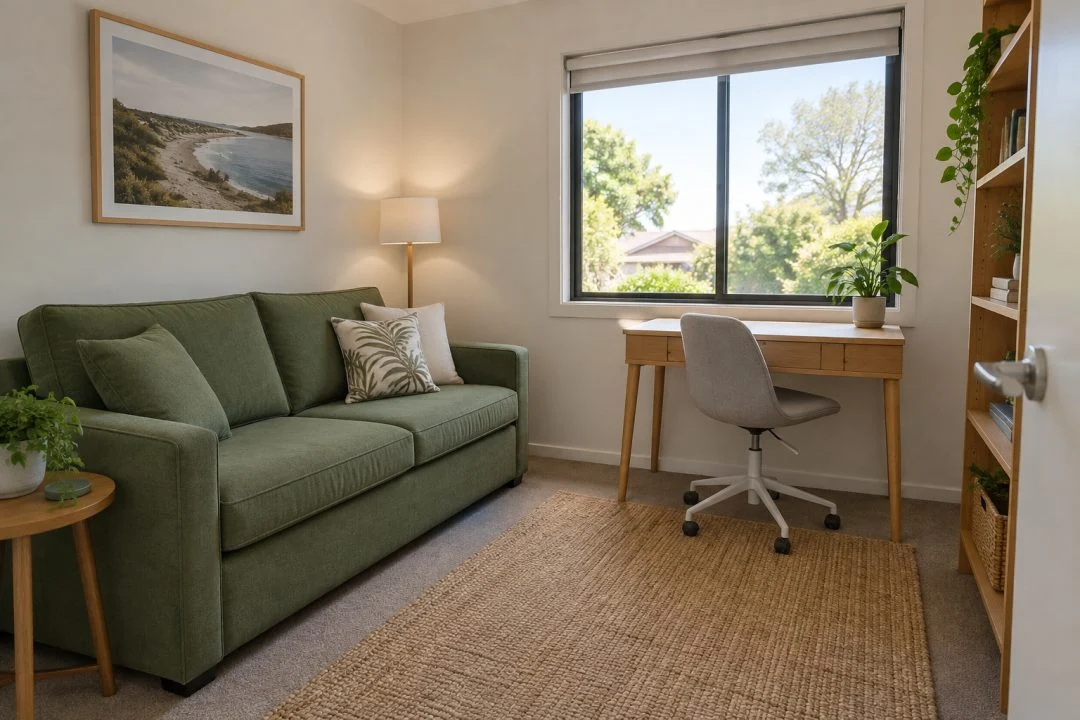
Sofa Bed Buying Guide: Seating, Sleeping and Open Space
Compare sofa beds as seats and as beds. Check open dimensions, mechanism instructions, mattress details and guest-room fit before ordering.
A sofa bed needs to work twice: as somewhere to sit and as somewhere to sleep. Check both modes before deciding it is the answer to a spare room or a small living area.
Begin with the main job. A sofa that hosts an occasional overnight guest may involve different compromises from furniture intended for regular sleeping. Read the manufacturer’s stated use and do not assume that a convertible design is suitable for every frequency of use.
There are three footprints to check
Closed: the normal sofa width and depth, with enough room around it for everyday use.
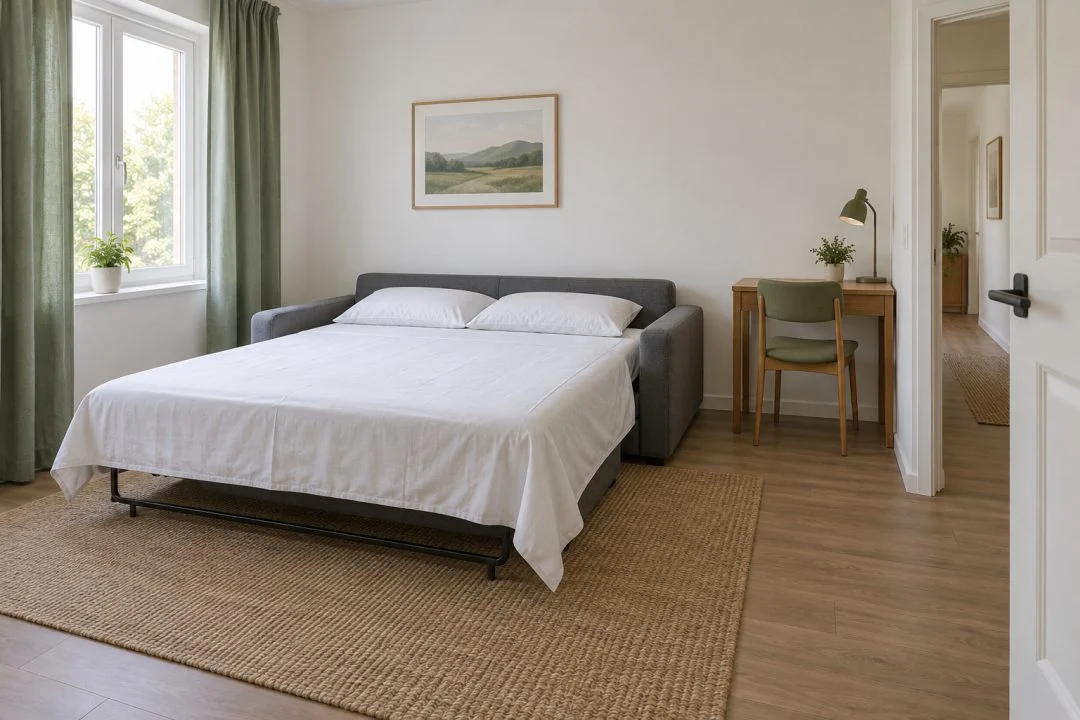
Open: the full extended furniture footprint, not only the sleeping surface.
In motion: the space needed to pull, unfold or lower the mechanism while changing between modes.
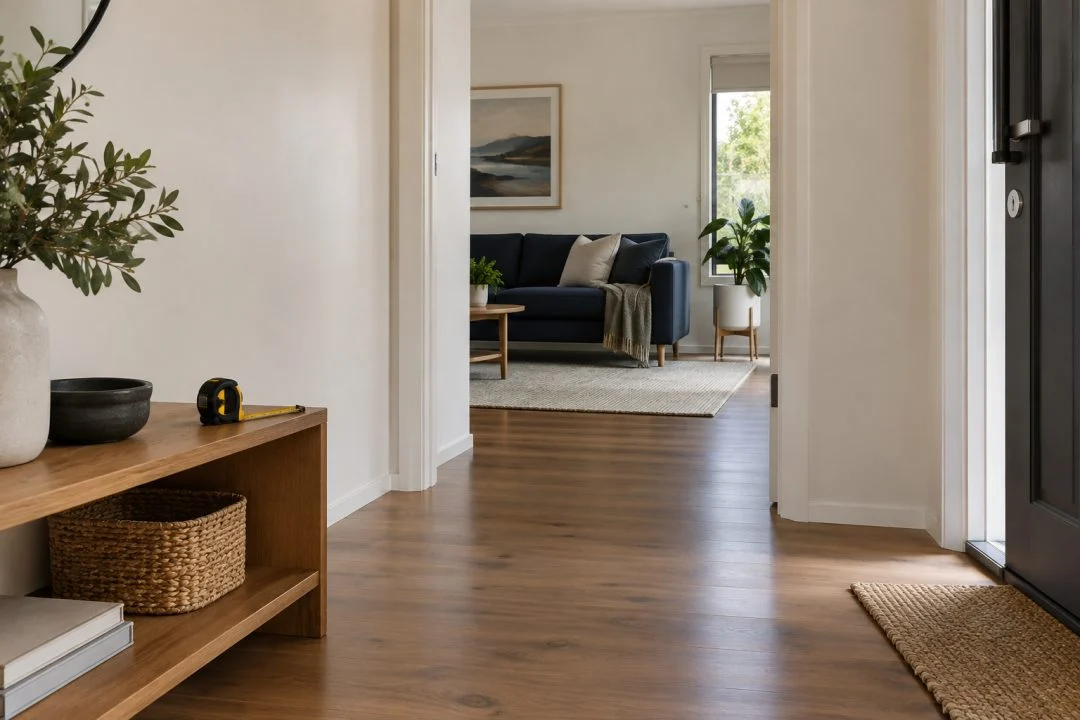
Tape the closed and open outlines onto the floor. Include the nearby coffee table, desk and storage doors. Work out where movable furniture goes at bedtime; putting it in the only exit route is not a workable storage plan.
Read the sleeping dimensions carefully
A sofa’s overall width is not its mattress width. Look for the actual sleeping-surface dimensions and compare them with the needs of the intended guest. Check whether a separate mattress is included, whether the cushions form the surface, and what bedding the manufacturer recommends.
Do not assume standard bed-size names correspond exactly to the sleeping surface of a convertible sofa. Confirm the dimensions before buying fitted sheets. Seams, cushions and the mechanism can also affect the feel in ways the measurements cannot describe.
The guest mattress guide helps compare the questions to ask about occasional sleeping arrangements. It is not a substitute for checking the particular sofa bed’s construction.
Try the bedtime routine on paper
- Move the furniture that occupies the open footprint.
- Allow the space and handling access specified for the mechanism.
- Open the bed and engage its supports or locks as instructed.
- Check access beside the sleeping surface and to the door.
- Find a dry, suitable place for bedding when the sofa is closed again.
If the plan involves several heavy moves, it may be inconvenient for frequent use. In a room that doubles as a workspace, the guest-room and home-office layout guide helps decide where the desk and chair belong when the bed is open.
Ask before ordering
What is the closed size, full open size and usable sleeping surface? What is included? How many people are needed to operate it? What use and load limits are stated? Where does the bedding go?
Do not forget the sitting test
Seat height, depth, back shape and cushion construction still matter. If the sofa spends most of its life in the living room, choose a seating arrangement that suits everyday use rather than judging it only as an emergency bed.
Read the care instructions for each component. A removable cushion or cover does not automatically have the same cleaning method as the frame upholstery or sleeping surface.
Check how it arrives
Use the package dimensions and assembly information to measure the delivery route. An opening mechanism does not mean the sofa arrives in small pieces, and a compact sleeping surface does not guarantee a compact carton.
When both modes, the conversion routine and the delivery route work, you have a useful shortlist. The best choice is the one that makes the room easier to use after the guest has gone home as well.