Office Chair Buying Guide: Adjustments and Personal Fit
Compare office chairs by adjustment range, seat dimensions and desk compatibility. Check documented features instead of relying on ergonomic labels.
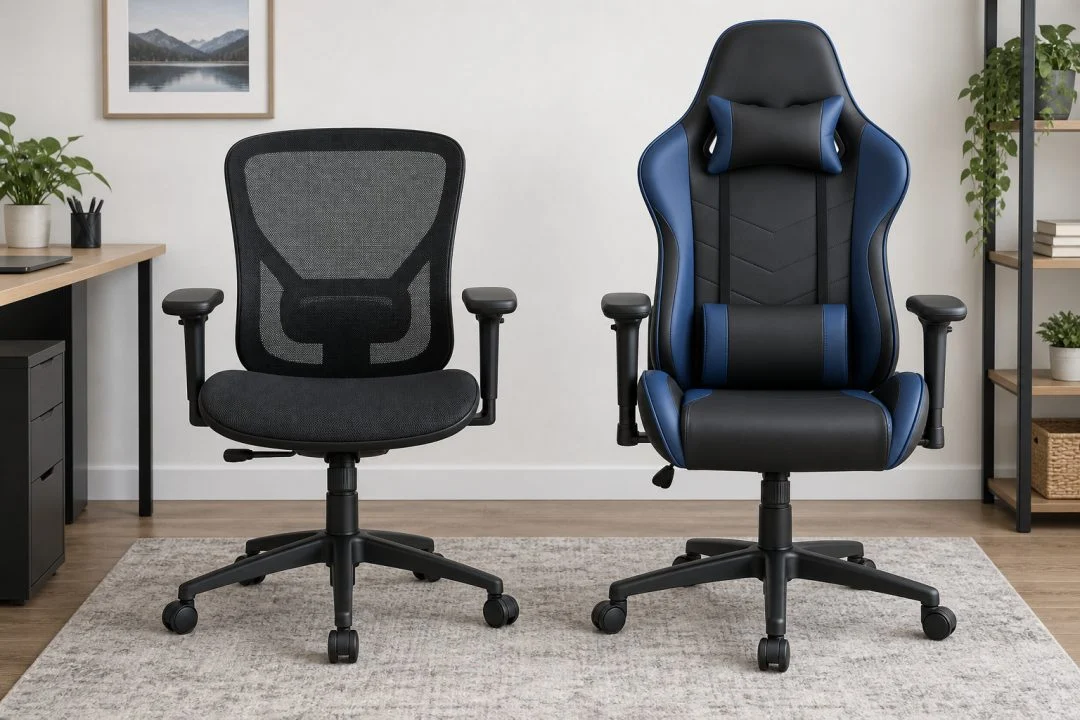
An office chair needs to fit you and work with the desk. The word ergonomic, a high back or a dramatic shape does not establish that fit.
Start with the adjustments you need, then compare the actual ranges and dimensions. A control is useful only if it moves the chair into a suitable position for you.
Check the seat, back and controls
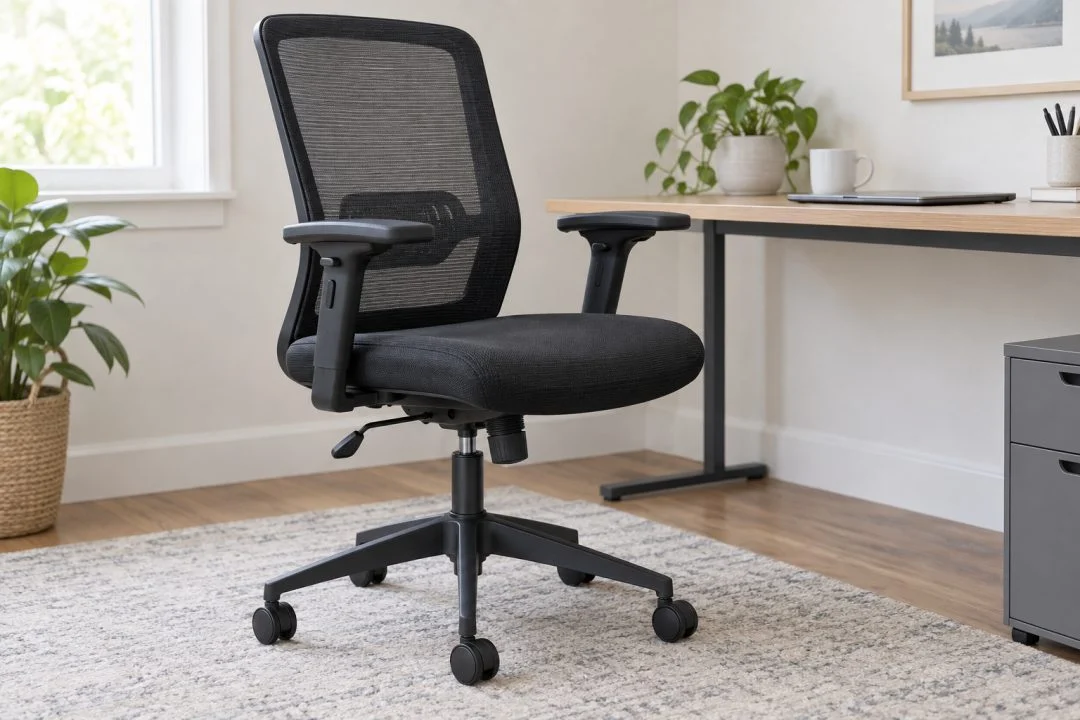
WorkSafe Queensland’s chair guidance emphasises personal fit, accessible controls, suitable load rating and adjustment of the seat and back support. It also explains checking the seat against your width and leg length, and whether armrests interfere with reaching the desk.
Use that guidance to assess a candidate, rather than assuming a longer feature list means a better chair. If a listing says adjustable backrest, find out what adjusts: height, angle, support position or some combination.
| Specification | Question to resolve |
|---|---|
| Seat-height range | Does the actual range suit the desk and your setup? |
| Seat width and depth | Does the seat fit you without an awkward edge or reach? |
| Back support | Can its position and shape suit your needs? |
| Armrests | Will they support the task without blocking access to the desk? |
| Load and intended use | Are the maker’s stated limits suitable? |
| Castors and base | Are they appropriate for the floor and intended use? |
Assess it at the desk
Where possible, try the actual model and learn the controls. Sit in your working position, reach the input devices and check the chair’s movement within the room.
If you are buying online, record the dimensions of a chair you already find useful and the specific changes you want. This gives the comparison more substance than choosing by backrest height alone.
Do not expect the chair to fix the whole setup
The desk, screen, input devices and working routine still matter. See setting up a home workstation for the wider sequence.
If you have ongoing discomfort or particular health or access requirements, obtain appropriate professional assessment. No chair in a general buying guide can be promised to prevent or treat a condition.
Compare delivery, assembly and return terms alongside price. Keep the instructions and adjust the chair after assembly according to the maker’s directions. A suitable chair should be a considered fit for your work, not a collection of features you never learn to use.