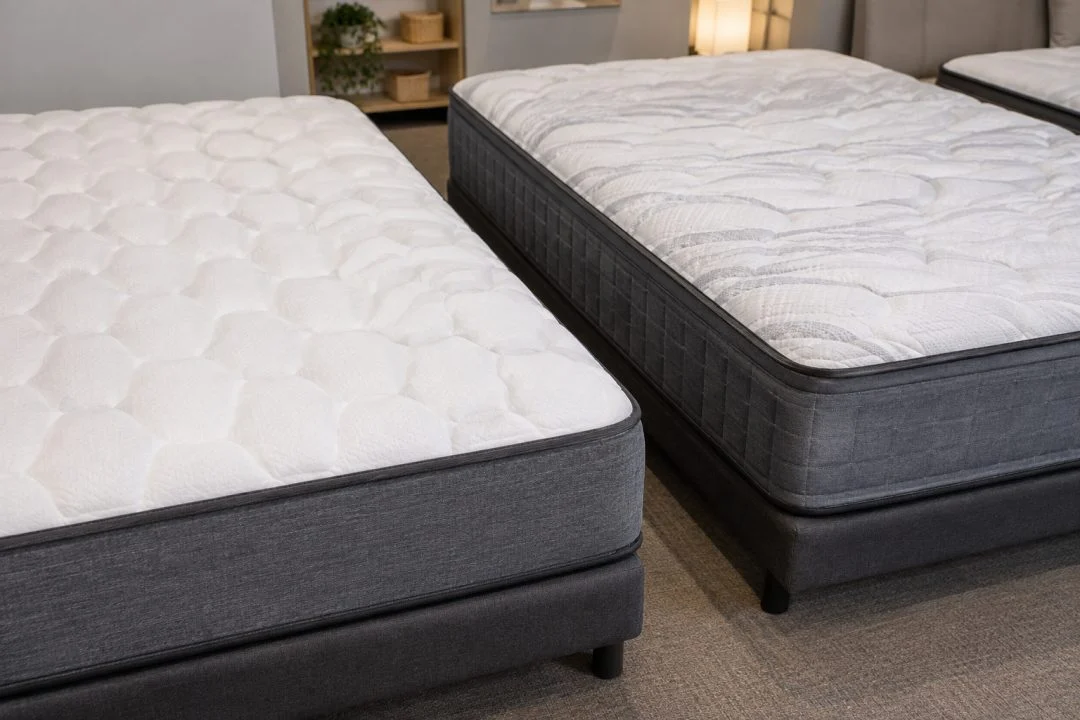
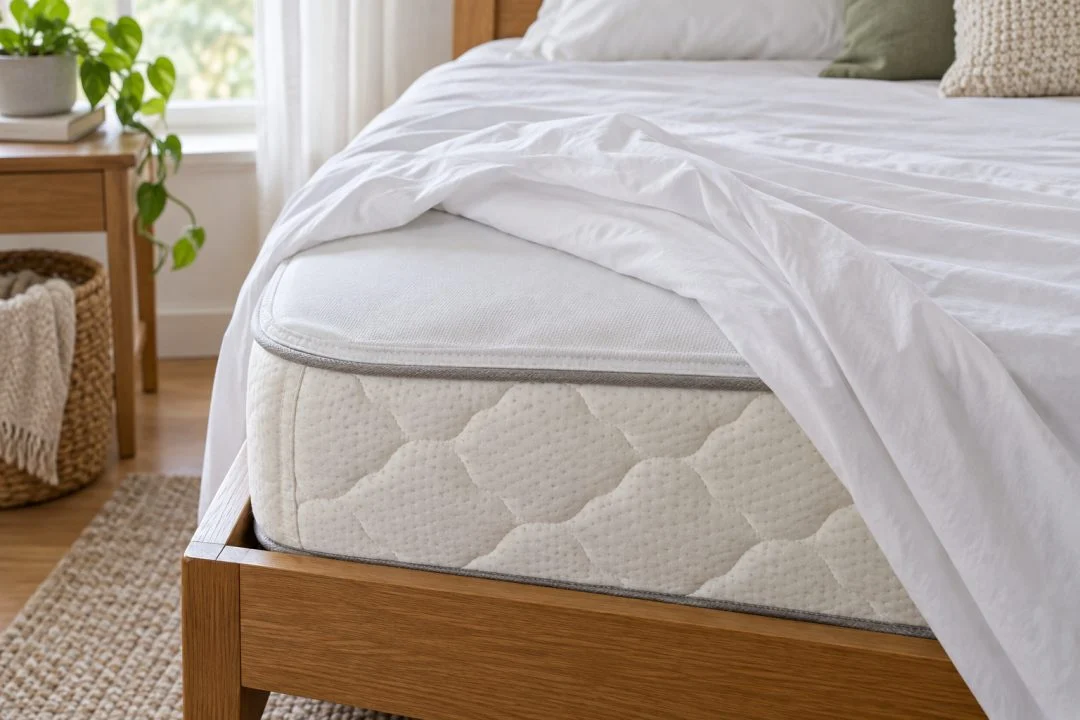
Foam, Spring or Hybrid Mattress: Understand the Construction
Understand foam, spring and hybrid mattress descriptions. Compare documented layers, support compatibility and practical purchase details.
Foam, spring and hybrid describe broad construction ideas. They do not tell you, on their own, whether a mattress will feel comfortable to you. Two mattresses in the same group can have different layers, firmness, depth and base requirements.
Use the construction label to understand what you are comparing. Then look for the details that let you compare actual products.
What the names usually describe
- Foam
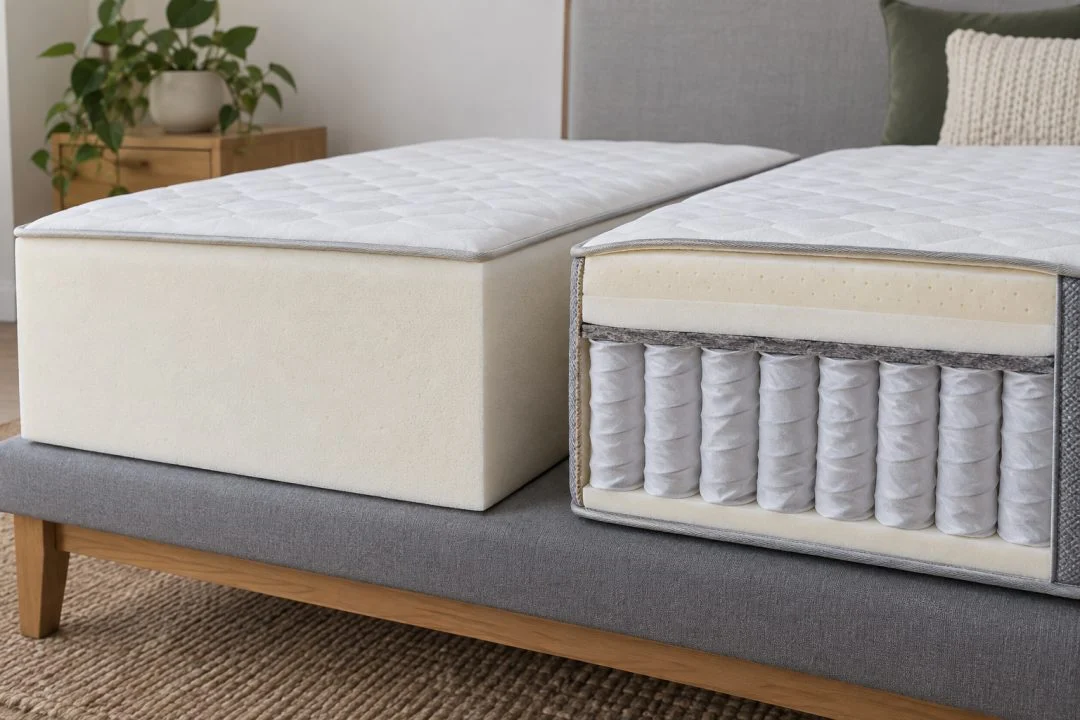
- A mattress built around foam layers rather than a spring support unit. The listing should identify the materials it actually uses. “Foam” alone does not establish memory foam, latex or a particular density.
- Spring
- A mattress containing a spring support system with other materials above it. Look for the stated spring type and the comfort layers, rather than judging the whole mattress by a spring count.
- Hybrid
- A marketing category generally used for a combination of springs and substantial comfort layers. The exact combination needs to be described; the word is not a complete specification.
Read one listing all the way through
Take a candidate and write down its size, depth, construction, described firmness, compatible base and care instructions. Mark anything that is not supplied. Repeat for the next candidate using the same headings.
This makes gaps visible. A detailed layer description for one mattress cannot fairly be compared with an attractive photo and the word premium for another. Ask about a missing fact that matters to your purchase.
Keep material names precise. A gel-related description does not automatically establish how cool a mattress will feel in your bedroom. A spring description does not prove a particular level of partner-motion isolation. Look for evidence attached to the specific model rather than transferring a benefit from the whole category.
Separate feel from construction
You may like a softly cushioned surface or a more immediate, firmer feel. Construction can help explain that experience, but cannot replace it. When possible, assess the actual model in your normal resting positions, rather than pressing it briefly with a hand.
If you are comparing online, note what you like and dislike about your current mattress. “I want less of a sinking sensation” is more useful than assuming all foam or all springs will suit you. Our firmness guide explains why labels need context.
Check the less glamorous details
- Will the mattress dimensions match the frame’s requirements?
- Is its weight suitable for any lift-up mechanism?
- Does the existing base meet the mattress maker’s support requirements?
- What are the unpacking, rotation and cleaning instructions?
- What are the actual return conditions? Do not assume an opened mattress comes with a sleep trial.
The bed-frame guide and mattress-care guide cover the surrounding setup. For a specific health concern, seek advice from a qualified health professional rather than treating a furniture description as a treatment recommendation.
A good shortlist is not three construction labels. It is a small set of clearly described mattresses that fit your bed, budget and preferences, with the unanswered questions resolved before you order.