Extendable Dining Tables: A Practical Buying Checklist
Check an extendable dining table in both sizes, including leg positions, leaf storage and extra chairs, before choosing a model.
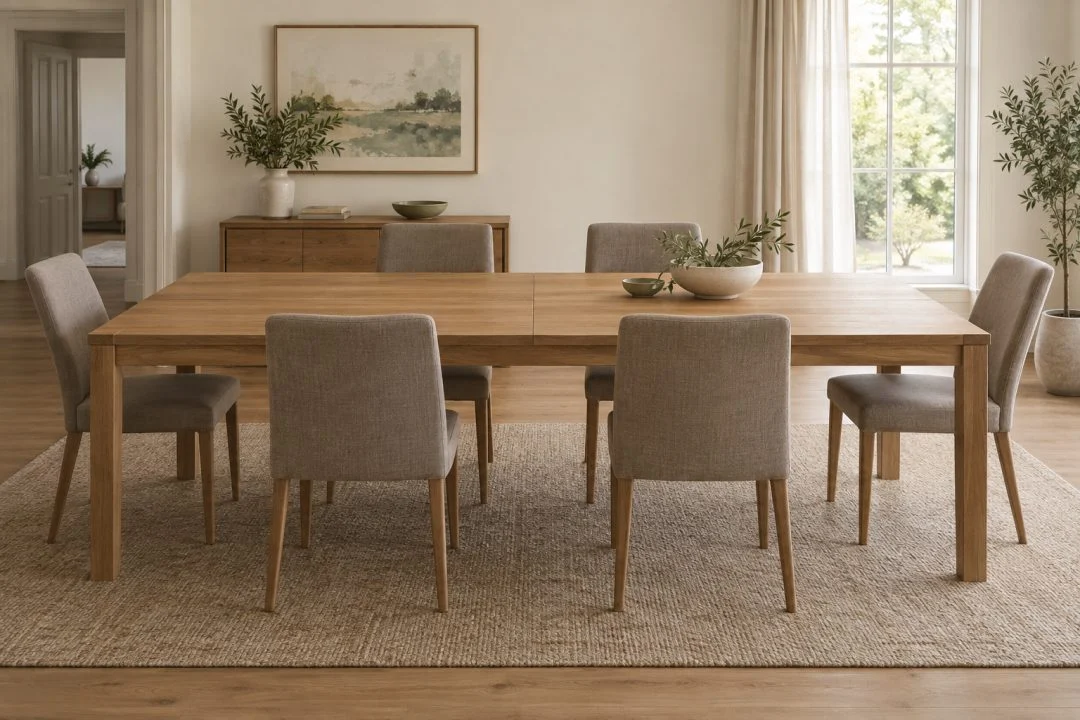
An extendable dining table is really two tables sharing one base: the one you live around every day and the larger one you use for guests. Both need to fit. There is also a third thing to plan—the extension itself when it is not in use.
A good shortlist records all three states. The product name alone will not tell you whether a leaf stores inside the table, needs a cupboard or changes where the legs sit.
Before you compare mechanisms
Write down the everyday length and width, the fully extended length and any intermediate settings. Keep the units consistent. A table described as seating four to six may be perfectly suitable, but the numbers do not replace the actual chair arrangement.
Tape both footprints onto the floor. Then put the extra chairs in their hosting positions. Check the route to the kitchen and any doors or drawers nearby. The dining table measuring guide shows how to work backwards from the room rather than simply choosing the longest available table.
Decide what must move when you extend it. Moving a lightweight side chair may be an easy occasional adjustment; moving a loaded sideboard every time you have visitors is a much bigger commitment.
Ask these questions about the actual table
- How does it open? Read the supplied instructions or ask for a demonstration video for that model. Do not assume it works like another extendable table.
- How many people are needed? Follow the manufacturer’s guidance for handling the top and extension leaf.
- Where is the leaf stored? Check whether storage is integrated and whether any separate protection is specified.
- How is it secured? Identify the locks, catches or supports that must be engaged before use.
- Do the legs move? Recheck knee space and chair positions in the extended arrangement.
A butterfly leaf, a separate insert and a drop-leaf table solve related problems in different ways. Their convenience depends on the specific construction and your room. Choose a mechanism you can use as instructed rather than one with the most impressive name.
Keep this three-state note
Closed: dimensions, everyday seats and walking route.
Open: dimensions, guest seats, space to operate the mechanism and any furniture that must move.
Stored: leaf location, spare-chair location and the handling instructions.
The spare-chair problem
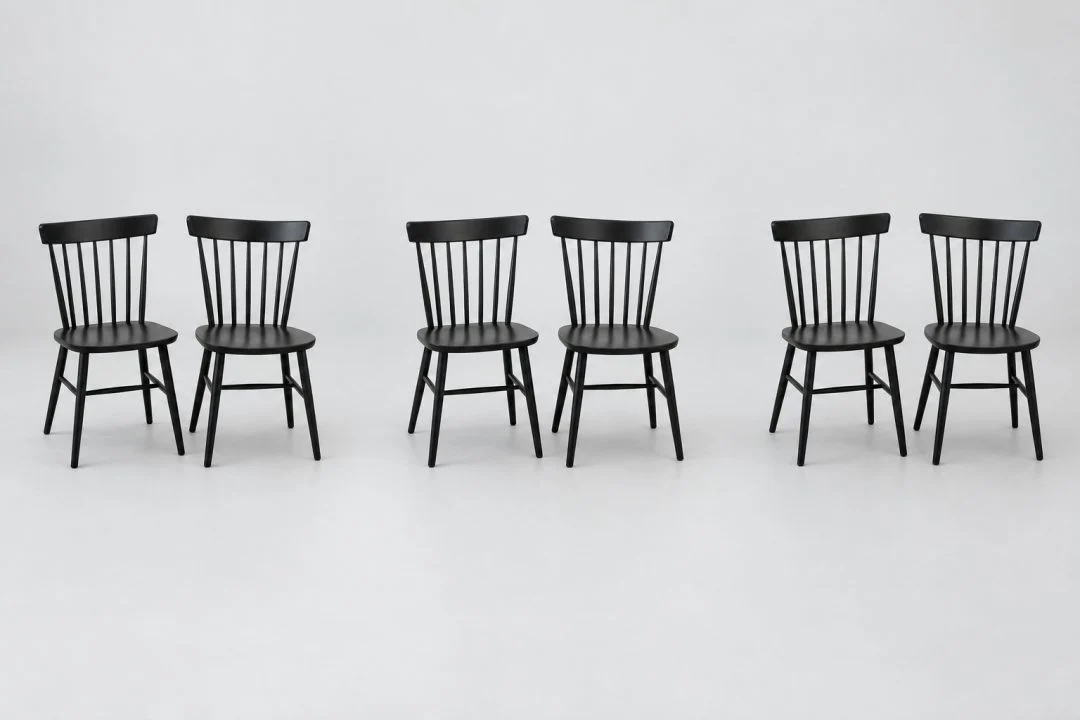
It is easy to plan the larger tabletop and forget where two or four extra chairs will live. Measure their storage location, including the depth of a stack if the actual chairs are designed to stack. Do not assume upholstered chairs or similar-looking models can be nested together.
If you are adding chairs later, compare their height, width and arms with the table before focusing on the finish. Check whether the item is sold individually or as a pack. Our chair-pack quantity guide helps turn “two more places” into the correct order quantity.
Use the extra space for people first
At a larger meal, serving dishes and decorations can take back the space you gained. Consider putting some serving items on an existing nearby surface instead. Keep hot items on appropriate protection and leave the route clear.
If you are planning for a particular occasion, making room for guests in a small home covers the seating and serving plan. Check actual dispatch and delivery information well before the event; an extension mechanism does not make a late delivery more useful.
The right extendable table makes an occasional change easy while staying comfortable the rest of the time. If you have somewhere for the leaf, somewhere for the chairs and enough room in both states, you are comparing genuinely workable options.