A Dining Room Refresh with an A$800 Furniture Budget
Plan an A$800 dining-furniture budget with clear priorities, quantities and delivery exclusions. Keep what works and spend where it matters.
An $800 dining-room budget goes further when it has a clear job. Replacing an uncomfortable set of chairs is a different project from starting with an empty room. Decide what is staying before dividing up the money.
The examples below are planning allocations, not current product offers. They show how to reserve money for delivery and the things you actually need. Check the current item prices, sale quantities and delivery quote before treating any shortlist as affordable.
First, give the existing furniture a fair chance
Make three notes: what works, what does not, and what is merely a different style from the room you now want. A sound table that fits the space may be worth keeping even if its chairs need replacing. Equally, comfortable chairs can remain while a poorly sized table changes.
Do not keep a damaged or unstable piece simply to make the budget look better. Follow the product’s maintenance guidance and seek advice where safety or a repair is uncertain. The useful savings come from retaining furniture that is still fit for its job.
| Planning route | Furniture allowance | Delivery/other reserve | Maximum budget |
|---|---|---|---|
| Keep the table; replace chairs | $650 | $150 | $800 |
| Keep the chairs; replace table | $650 | $150 | $800 |
| Start with table and chairs | $350 table + $300 chairs | $150 | $800 |
These are caps to test, not estimates of what delivery will cost or a promise that a suitable product exists at each amount. If the real delivery quote is higher, reduce the furniture allowance or revise the project. If it is lower, you do not have to spend the difference.

Route one: keep the table
Record the tabletop height, apron clearance and space between the legs. Those measurements decide which replacement chairs can work. Count the seats you use daily rather than buying a larger pack simply because the per-chair figure is attractive.
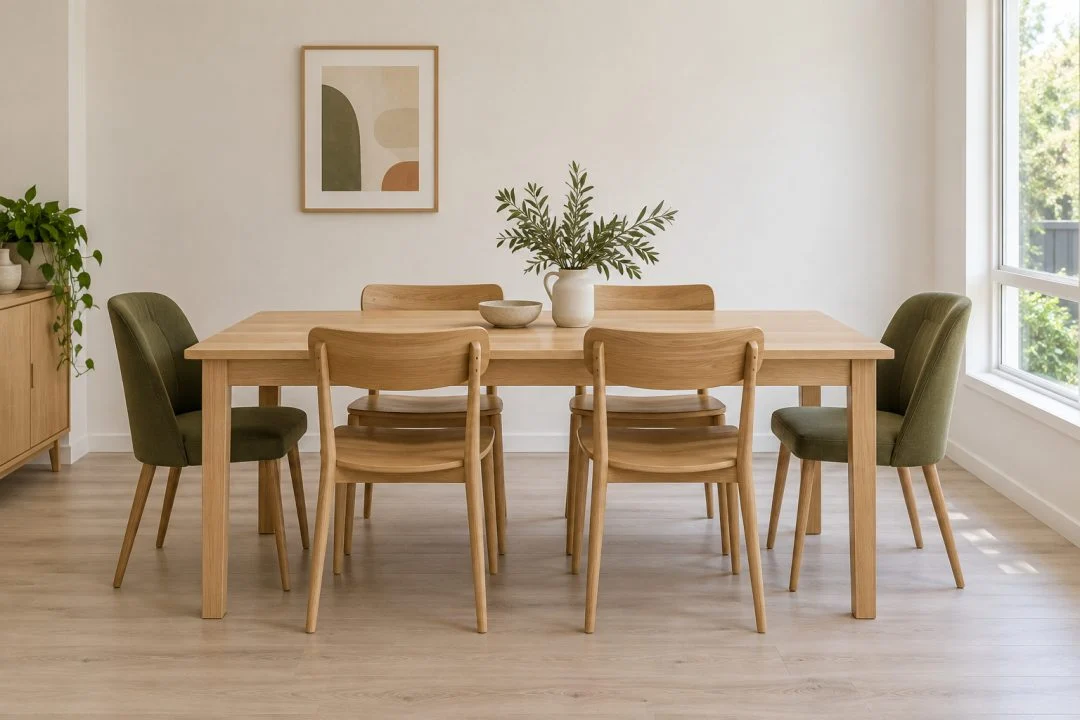
You can also replace only part of the set. A new pair at the ends of a rectangular table may be enough if the other chairs remain comfortable and sound. The mixed dining-chair guide shows ways to make that choice look deliberate.
Route two: keep the chairs
Start with the actual chair widths and heights. Tape a candidate table footprint onto the floor and arrange the chairs around it. Check the space needed to pull them out and whether their arms tuck underneath.
A table that looks modest in a large photograph can dominate a small dining zone. Resist spending the full allowance on the biggest one available. A smaller suitable table may leave the room more useful and the budget more comfortable.
Route three: start from scratch
Keep the first shortlist simple: a table, enough chairs for everyday use and a workable delivery total. Delay the sideboard or extra guest seating if those are not essential. It is easier to add a useful piece later than recover space from a room bought all at once.
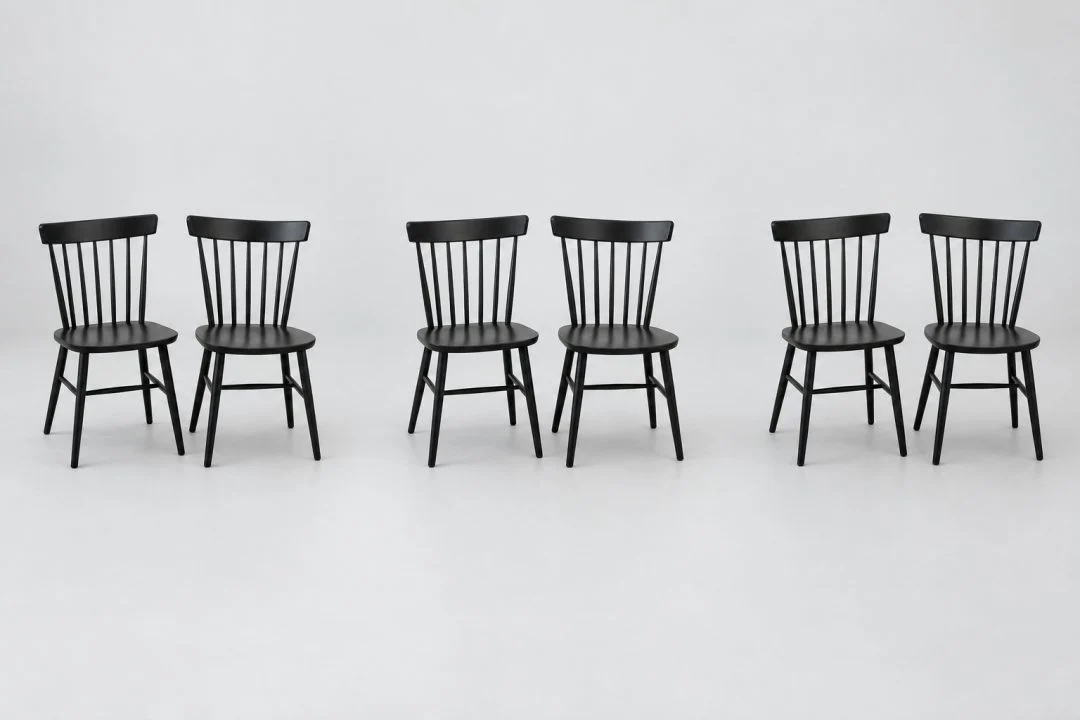
Check the payable chair-pack total. A set of two priced at $150 means four chairs require two sale units, costing $300 before delivery. A unit-price comparison can help, but the cart quantity must match the pack size. See dining-chair pack arithmetic before ordering.
Finish with the real basket
Compare the complete purchase at your address: item totals, delivery, inclusions and any assembly you need to arrange. Keep optional decor outside the furniture budget until those essentials are covered. Our guide to the full delivered price explains which details to compare.
A successful refresh does not have to look like a completely new room. If the table fits, the chairs are comfortable for their users and the total stays within the money you set aside, the budget has done its job.