How to Organise a Wardrobe Before Buying More Storage
Organise hanging clothes, folded items and occasional belongings before buying extra storage. Measure the remaining gap rather than guessing.
Do one wardrobe section at a time. Emptying everything onto the bed can turn a manageable job into a late-night problem with nowhere to sleep.
Start with a shelf or rail that frustrates you most. The aim is to learn what storage you need, not to achieve a photograph of identical beige clothes.

Sort by how the items are used
Separate regularly worn clothes, occasional items, seasonal pieces and things that belong elsewhere. Decide what to keep, repair, donate or dispose of appropriately before measuring for new storage.
Keep the categories practical for you. Work shirts might need one accessible hanging section; knitwear may belong folded on a shelf. A system is useful when you can put things back without thinking very hard.
Measure the clothes, then the space
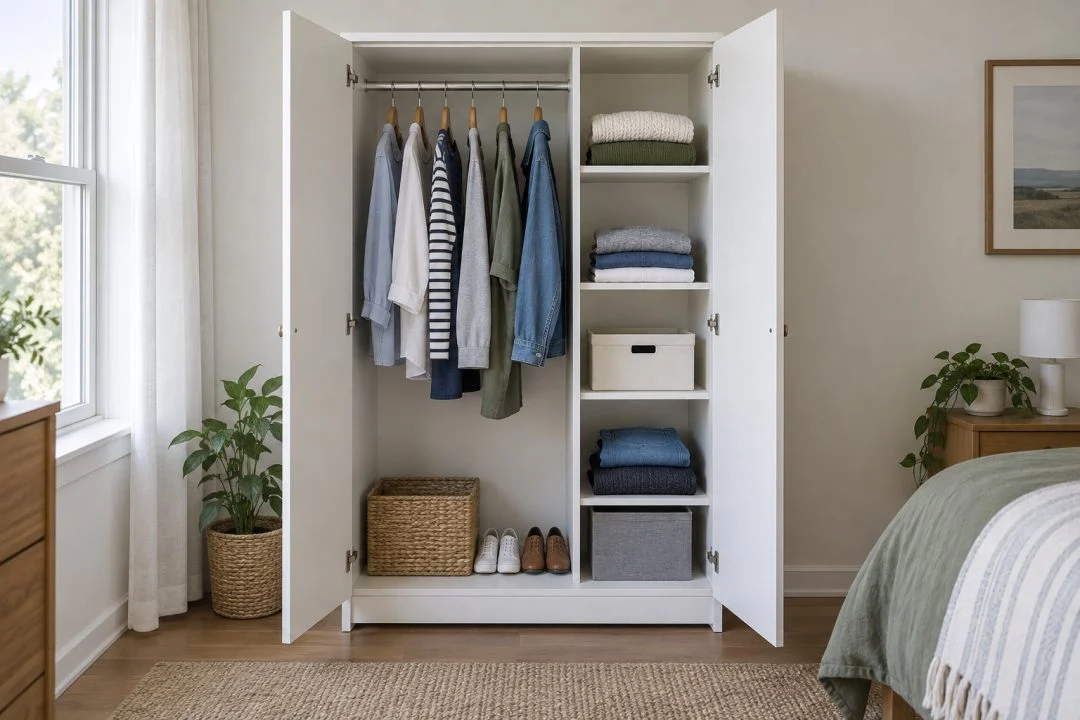
Check the length of hanging items, the width taken up by a realistic group of hangers and the dimensions of a folded stack. Compare these with the usable interior, not the outside of the wardrobe.
Record what remains short of space. For example: long hanging clothes fit, folded jumpers do not. That points towards shelves or drawers rather than another full-height hanging cabinet.
Return the regular items first
Put frequently used things where they are easy to see and reach. Place occasional items in the less convenient areas only where their weight and the storage instructions make that appropriate.
Do not overload rails or shelves, and do not stack heavy items precariously above you. Use any adjustable components only in the positions and manner intended by the manufacturer.
A short inventory
Regular hanging clothes · long hanging clothes · folded everyday clothes · seasonal items · small accessories. Beside each group, write “fits”, “reorganise” or “needs more space”.
Live with the arrangement before buying
Try a normal laundry cycle. Notice which group ends up on a chair again and why. Perhaps the shelf is too high, the drawer too full or the storage is in the wrong room.
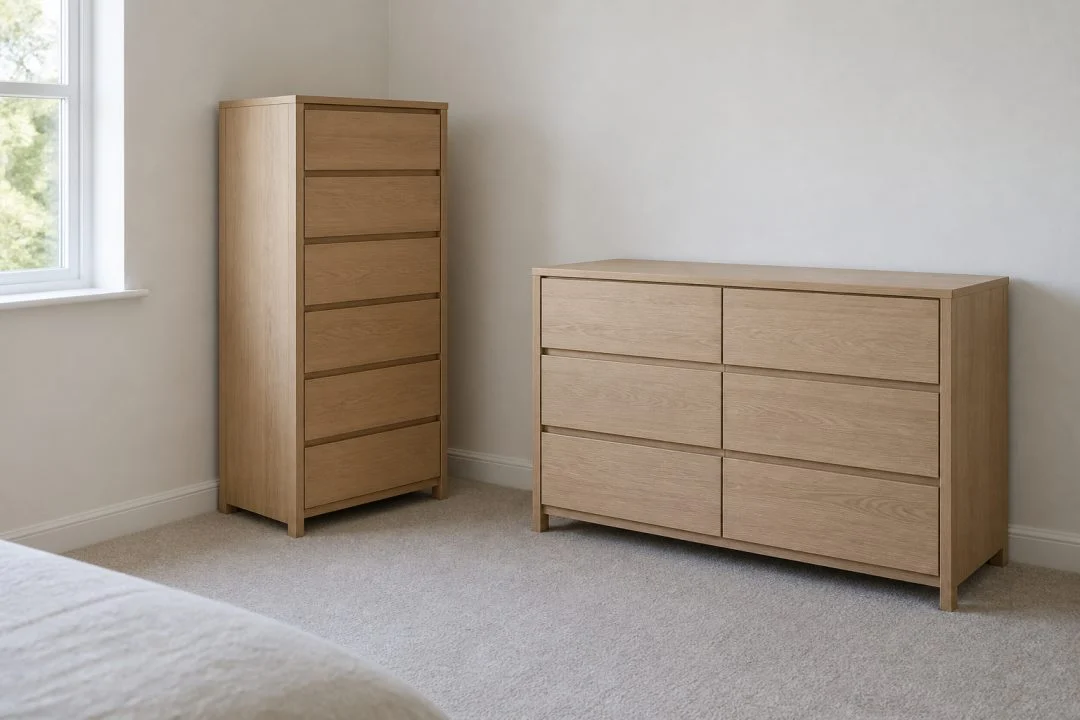
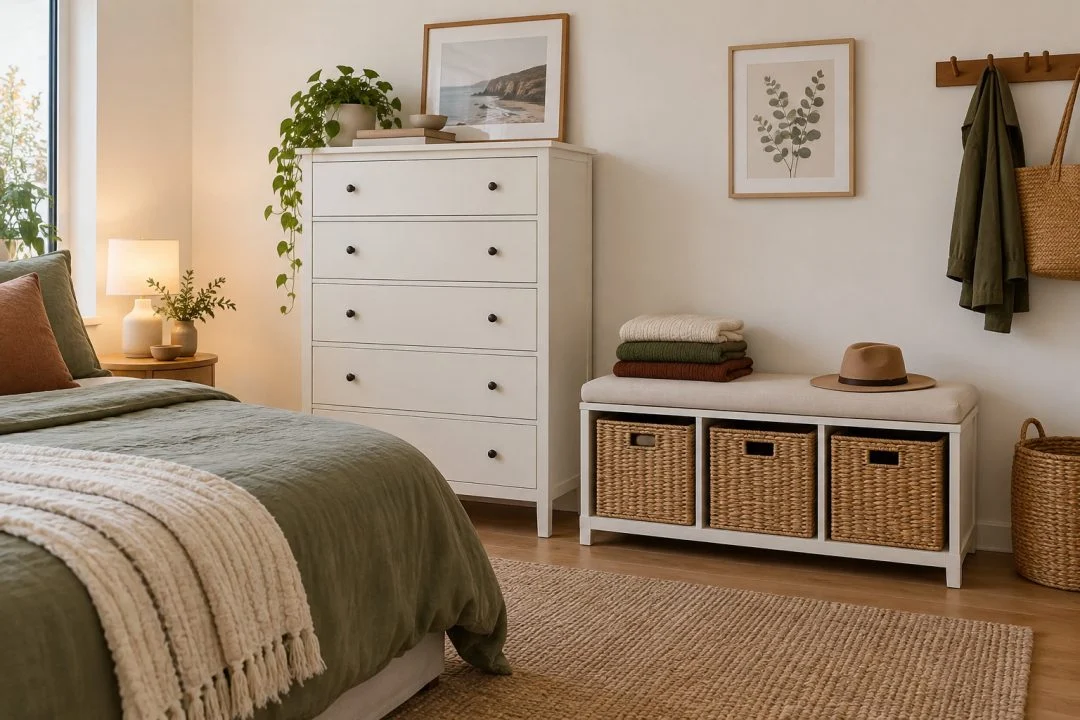
If there is a genuine shortage, use the wardrobe buying guide for hanging storage or compare chests of drawers for folded clothes. Bedroom storage without built-ins helps choose the smallest useful intervention.
Buy organisers only after measuring the space they will occupy. A box that fits the shelf but cannot slide past the door is simply a different kind of clutter.