Modern Industrial Style Without Making the Room Feel Harsh
Use industrial-style furniture with warmer textures and balanced proportions. Build an everyday room without exposed-brick renovations or heavy matching pieces.
Black metal and timber tones can look crisp together. Add brick, a hard floor and several sharp-edged pieces, though, and the room may feel less like somewhere to relax. You do not need to abandon the industrial direction; give the harder surfaces something softer to sit beside.
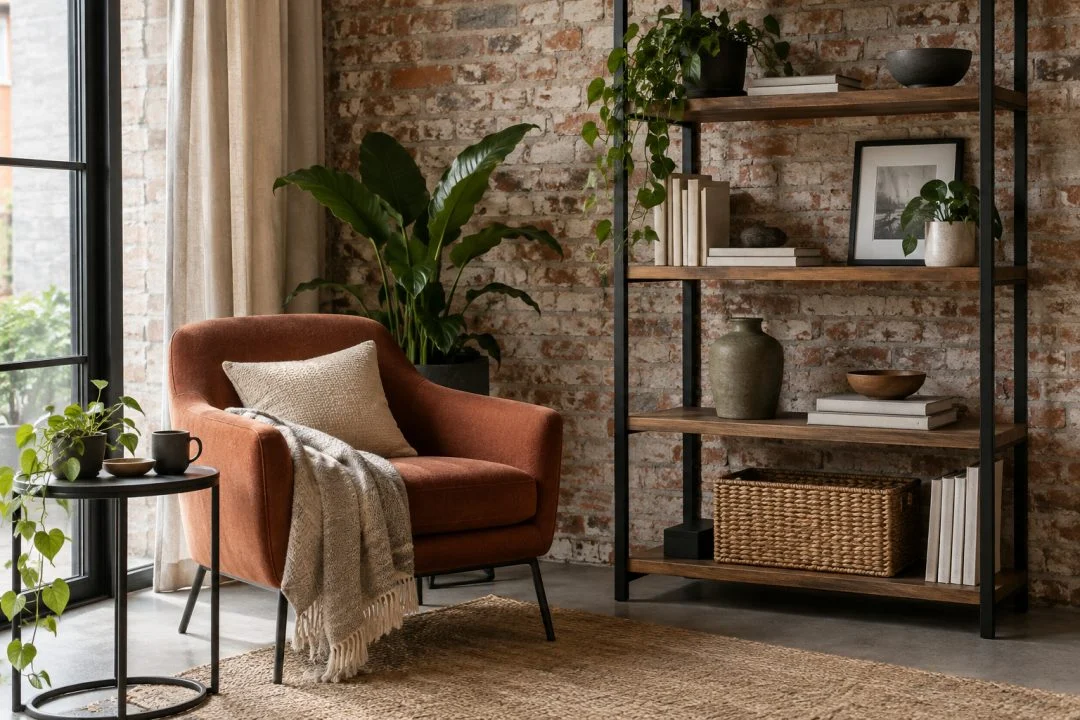
Think in pairs
| Harder element | A softer companion to try |
|---|---|
| Black metal shelving | Books, a fabric storage box and some unfilled shelf space |
| A straight-edged timber-look table | An upholstered seat or a curtain with a softer drape |
| Exposed brick or a strongly textured wall | A plain sofa covering rather than another busy pattern |
| Several dark furniture frames | A lighter wall or a warm mid-tone upholstery colour |
You are balancing what is already there. A room with a concrete-looking floor may need less metal furniture than a carpeted room. Look at the whole view, including the permanent surfaces, before choosing another piece.
Let the storage work
Open shelving suits this look, but the contents become part of the room. If you need to hide paperwork, cables or a collection of unrelated supplies, include closed storage rather than hoping every object will become decorative.
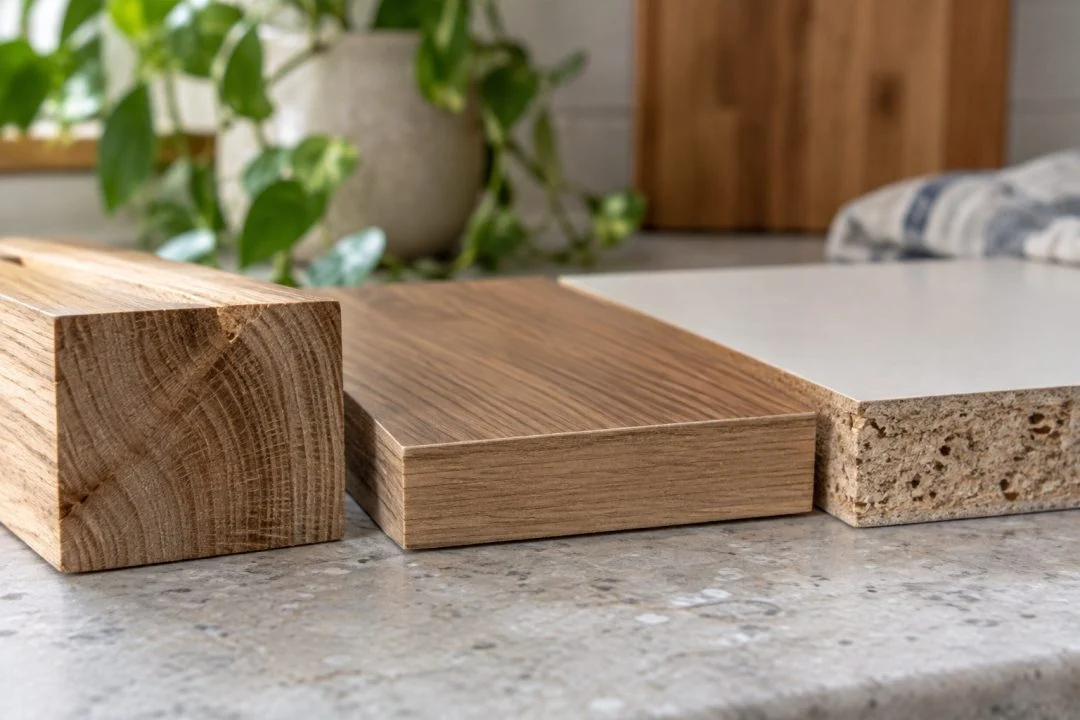
Check shelf dimensions and load instructions for what you intend to store. Metal-looking frames do not establish strength on their own. Likewise, a rustic timber finish tells you little about the board beneath it; read the material description separately. Follow the supplied installation and anchoring instructions.
Use a smaller dose in a compact room
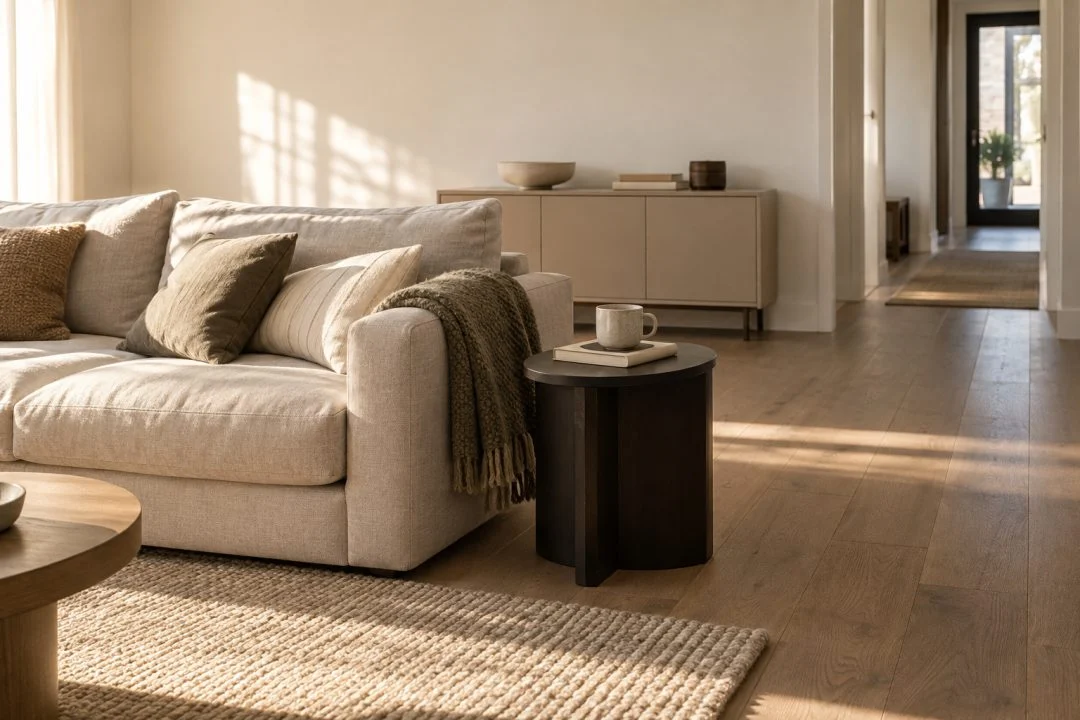
Try one black-framed table with a softer sofa, rather than a full suite of heavy dark pieces. Keep the route around the furniture practical. The coffee-table size guide helps check that the look does not consume the useful floor space.
If the room still feels harsh, remove one competing element before shopping. Move a spare stool elsewhere, clear a shelf or simplify the colour group. Then decide whether you are missing a useful seat, a softer textile or simply some empty space.
The same edit works in a warm minimal room: keep the pieces that perform a job, and make the combination comfortable for the people living with it.